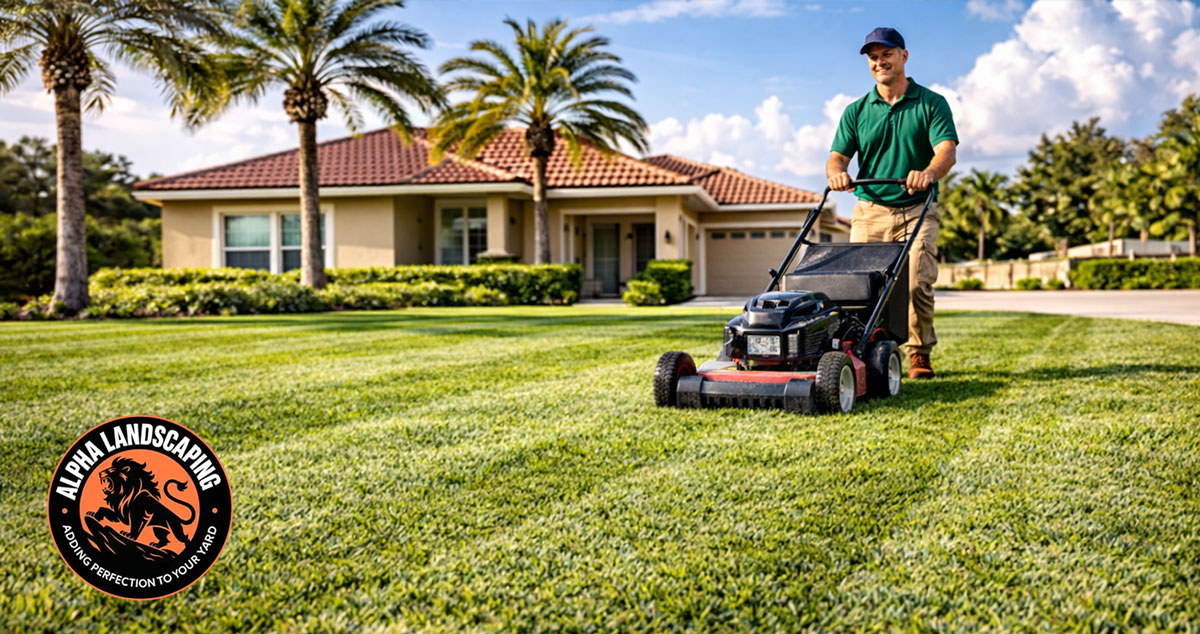
How Often Should You Mow Your Lawn in Central Florida? (By Grass Type)
How often should you mow your lawn in Central Florida? That’s one of the top questions I get from homeowners across Davenport, Clermont, Kissimmee, and the rest of Polk and Osceola County. The short answer is: it depends on the season, your grass type, and what the weather is doing that week. The longer answer is what this post is all about.
I’m Austin Halsey, owner of Alpha Landscaping LLC, and I’ve been mowing lawns in Central Florida since I was 12 years old. I’ve seen what happens when people mow too little, too much, or at the wrong height. Let me save you the headache and walk you through a simple, season by season schedule that works right here in our part of the Sunshine State.
The One Third Rule: The Golden Standard
Before we talk about timing, you need to know the most important mowing rule there is. The University of Florida IFAS Extension says you should never remove more than one third of the grass blade in a single mowing. So if your grass sits at a 4 inch ideal height, you should mow it once it reaches about 6 inches. Cut it shorter than that in one pass and you stress the roots, invite weeds, and open the door to disease.
This one rule alone will help you figure out when your lawn actually needs to be mowed, instead of guessing.
Spring Mowing Schedule (March Through May)
Spring is when Central Florida lawns wake up. The days get longer, the rain picks up, and your grass starts growing like it’s in a race. Here’s what I recommend:
- Mow every 7 days — Weekly mowing is the sweet spot for spring. Your St. Augustine and Bermuda grass are growing fast, and letting them go 10 or 14 days will leave you with a shaggy mess that’s hard to cut clean.
- Keep your cut height on the tall side — Higher cuts promote deeper roots and better drought resistance heading into summer.
- Sharpen your blades — Dull blades tear grass instead of cutting it. That torn grass turns brown at the tips and gets stressed. We sharpen ours regularly, and you should too (or let us handle it).
Spring is also the perfect time to set up a recurring lawn maintenance plan so you don’t fall behind once summer heat kicks in.
Summer Mowing Schedule (June Through September)
Summer in Central Florida is no joke. We get 90+ degree days back to back, afternoon thunderstorms almost every day, and humidity that makes you sweat just standing still. Your grass feels it too.
- Mow every 5 to 7 days — This is peak growing season. Your lawn can grow an inch or more per week, especially after a good rain. Some weeks you might even need two passes.
- Raise the mowing height slightly — Taller grass shades the soil, reduces water evaporation, and keeps roots cooler.
- Mow early in the morning or late afternoon — Mowing in the midday heat stresses both you and the grass. We schedule our crews for early starts to beat the worst of it.
- Don’t mow wet grass — After those afternoon storms, wait until the next morning. Wet grass clumps, clogs mowers, and doesn’t cut evenly.
For our senior customers, summer is when professional mowing matters most. The heat alone makes it dangerous for older adults to work outside for extended periods.
Fall Mowing Schedule (October Through November)
Fall is a relief for both you and your lawn. Growth slows down, the temperatures drop a bit, and the daily rain pattern fades.
- Mow every 10 to 14 days — You can safely stretch to biweekly once growth noticeably slows, usually around mid October in our area.
- Keep your mowing height steady — Don’t drop it just because growth is slowing. The lawn needs that blade length heading into cooler weather.
- Great time for a yard cleanup — Falling leaves, dead fronds, and storm debris pile up fast. Our seasonal yard cleanup and mulching service pairs perfectly with a fall mowing schedule.
Winter Mowing Schedule (December Through February)
Here’s the thing about Central Florida winters: they’re mild. We rarely see hard freezes in Davenport, Clermont, or Kissimmee. That means your grass doesn’t fully go dormant like it does up north. It slows way down, but it doesn’t stop.
- Mow every 2 to 3 weeks — Most lawns need just a light trim to stay looking neat. You’re mostly mowing for appearance at this point, not because the grass is growing aggressively.
- Don’t scalp it — Keep the mowing height where it was in fall. Cutting too low in winter exposes the root zone and can cause damage if a cold snap hits.
- Watch for weeds — Cool season weeds love to pop up when your grass is sluggish. Keeping the lawn at proper height helps shade them out.
Mowing Frequency by Grass Type in Central Florida
Not all grass is the same. Here’s a quick breakdown of the most common turf types we see in Polk and Osceola County and how often each one needs to be cut:
| Grass Type | Best Mowing Height | Peak Season Frequency | Off Season Frequency |
|---|---|---|---|
| St. Augustine (Floratam) | 3.5 to 4 inches | Every 5 to 7 days | Every 14 to 21 days |
| Bermuda Grass | 1.5 to 2.5 inches | Every 5 to 7 days | Every 10 to 14 days |
| Zoysia Grass | 2 to 3 inches | Every 7 to 10 days | Every 14 to 21 days |
| Bahia Grass | 3 to 4 inches | Every 7 to 14 days | Every 21 to 30 days |
Source: UF/IFAS Gardening Solutions
Most homes in Davenport and surrounding communities have St. Augustine grass (Floratam is the most common variety). If you’re not sure what type of turf you have, we can tell you during a free property evaluation.
Since St. Augustine is the most common grass around here, I wrote a full breakdown on how often to mow St. Augustine grass that covers height, the winter myth, and the mistakes I see most.
What Happens When You Skip Mowing Too Long
I see this all the time. Someone goes on vacation, gets busy, or just puts it off. Then the grass gets out of control. Here’s what actually happens:
- You violate the one third rule. When you finally mow, you’re cutting off too much at once. That shocks the grass and weakens the root system.
- Pests move in. Tall, overgrown grass is a magnet for chinch bugs, mosquitoes, and even small rodents. None of those are guests you want.
- Weeds take over. Crabgrass, dollar weed, and clover thrive when your turf gets thin and stressed from inconsistent mowing.
- HOA violations. Many communities in Davenport, Champion’s Gate, and Four Corners have strict lawn maintenance standards. An overgrown yard can get you fined fast.
- Curb appeal drops. Your home’s exterior is the first impression. An unkempt lawn brings down the look of the entire property.
The easiest way to avoid all of this? Set up a consistent mowing schedule. That’s exactly what we do at Alpha Landscaping LLC.
Let Us Handle Your Mowing Schedule
Look, I get it. Life is busy. Keeping track of mowing frequencies, blade heights, and seasonal changes isn’t on most people’s to do list. That’s what we’re here for.
At Alpha Landscaping, we build a custom mowing plan for each property based on grass type, lot size, and the time of year. Our crew shows up on schedule, mows at the right height, edges everything clean, and blows off your walkways before we leave.
Ready to take lawn mowing off your plate? Here’s how:
- Call us at (352) 702-6361
- Get a free quote at Request a Free Estimate
- Learn more at alphalandscapingllc.com/about
We serve Davenport, Clermont, Kissimmee, Four Corners, Haines City, Winter Haven, and all of Polk and Osceola County. If you’ve been asking yourself how often should you mow your lawn in Central Florida, now you know the answer, and you know who to call when you’d rather not do it yourself.
Are you a senior or caring for an aging parent? Read our specific guide on how often seniors should mow their lawn in Florida.