Central Florida Lawn Maintenance Guide (2026)
This is the only Central Florida lawn maintenance guide you need — written by someone who mows, edges, and trims yards in Polk, Osceola, and Lake Counties every single week. I’m Austin Halsey, founder of Alpha Landscaping LLC, and I’ve been taking care of Central Florida properties since 2020.
Florida lawns are unlike anywhere else in the country. The heat is intense. The summer rain is relentless. The soil is mostly sand. And the grass never truly stops growing. What works in Georgia or North Carolina will get you into trouble fast down here.
This guide covers everything a homeowner or property manager in Central Florida needs to know — grass types, mowing schedules, fertilizing, pests, HOA rules, seasonal cleanup, and exactly when it makes sense to call in a pro. I’ve organized it by topic so you can jump straight to what you need right now.
Let’s get into it.
What’s In This Guide
- Know Your Grass Type First
- Mowing: The Foundation of Everything
- Fertilizing Central Florida Lawns
- Lawn Pests: What to Watch For
- Seasonal Lawn Care Calendar
- Mulching and Yard Cleanup
- HOA Lawn Care: What You Need to Know
- When to Hire a Professional
- Where We Serve in Central Florida
- FAQs
Central Florida Lawn Care: Fast Facts
| Factor | Central Florida Details |
|---|---|
| Most Common Grass Types | St. Augustine (Floratam), Bahia, Zoysia |
| Peak Growing Season | March through October |
| Avg. Annual Rainfall | ~52–54 inches (UF IFAS) |
| Soil Type | Sandy, fast-draining, low nutrient retention |
| USDA Hardiness Zone | Zone 9b (Polk, Osceola, Lake Counties) |
| Top Lawn Pests | Chinch bugs, sod webworms, mole crickets |
| Recommended Mow Height (St. Augustine) | 3.5 to 4 inches (UF IFAS Polk County) |
| Fertilize Timing (Central FL) | Mid-April and early October (UF IFAS) |
| HOA Fine Cap (per violation) | $100/violation, $1,000 aggregate max (FL Statute 720.305, HB 1203) |
| Counties We Serve | Polk County and Osceola County |
1. Know Your Grass Type First
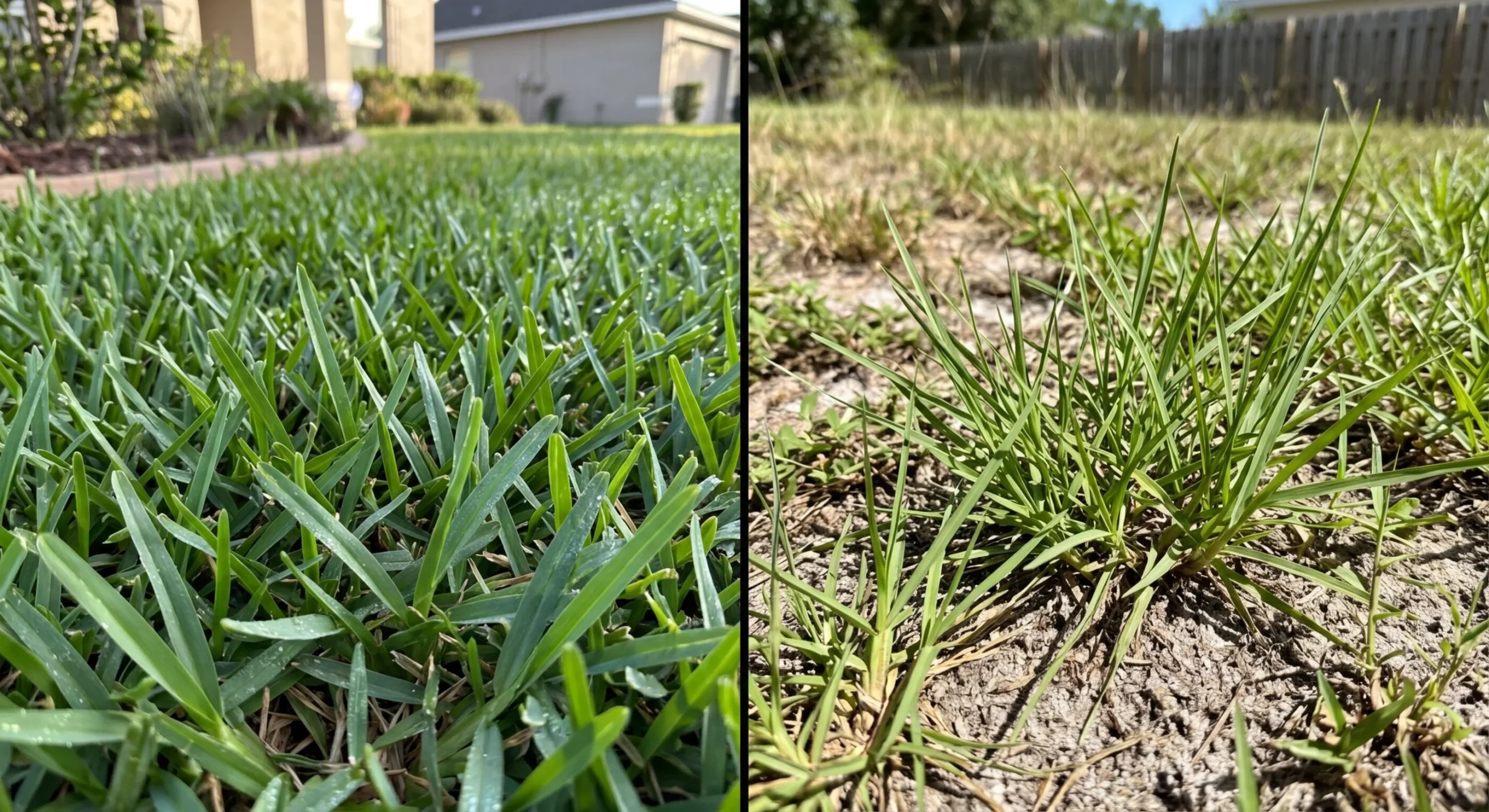
Before you do anything — before you mow, fertilize, or call anyone — you need to know what kind of grass you have. The three most common types in Central Florida are St. Augustine, Bahia, and Zoysia. They look different, grow differently, and need different care. Treating them all the same is one of the most common mistakes I see homeowners make.
St. Augustine (Floratam)
This is the king of Central Florida lawns. You’ll find it in the vast majority of residential neighborhoods, HOA communities, and vacation rental properties from Kissimmee to Groveland. It’s thick, lush, and handles Florida’s heat and humidity well. The downside? It’s the most high-maintenance of the three and the most vulnerable to chinch bugs.
- Mow height: 3.5 to 4 inches for standard Floratam
- Water needs: High — needs consistent irrigation, especially in dry season
- Biggest threat: Chinch bugs and brown patch fungus
- Best for: HOA neighborhoods, residential lawns, resort communities
Bahia
Bahia is the workhorse. It’s deep-rooted, drought-tolerant, and thrives in Central Florida’s sandy soil with minimal fertilization. If you’ve got a large lot, a rural property, or just don’t want to put a ton of time into lawn care, Bahia is your friend. It won’t give you the thick carpet look of St. Augustine, but it’s tough as nails.
- Mow height: 3 to 4 inches
- Water needs: Low — handles drought well
- Biggest threat: Mole crickets
- Best for: Large lots, rural properties, low-maintenance situations
Zoysia
Zoysia is the premium option. It grows slower than St. Augustine, which means less mowing, and it has a thick, carpet-like look that HOA communities love. It’s also more pest-resistant than St. Augustine. The trade-off is it establishes slowly and doesn’t love heavy shade.
- Mow height: 1.5 to 2 inches
- Water needs: Moderate — less than St. Augustine
- Biggest threat: Thatch buildup if not managed
- Best for: HOA communities, front yards, high-visibility properties
Not sure what you have? Reach out and we’ll identify it during your free estimate visit.
2. Mowing: The Foundation of Everything
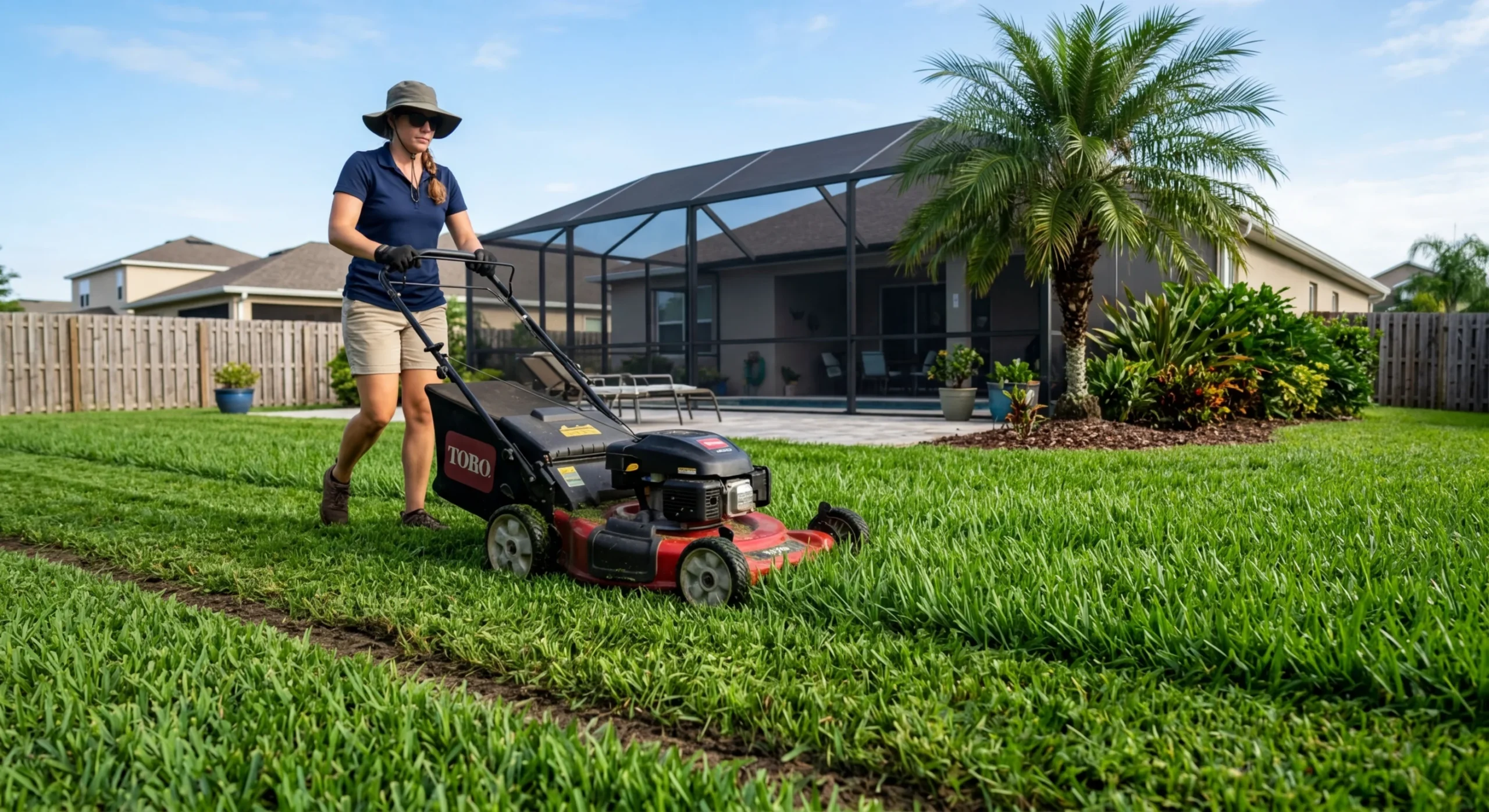
I’ll say this plainly: mowing is the single most important thing you do for your lawn. Get it wrong — cut too low, go too long between cuts, use dull blades — and everything else you do is uphill.
I’ve written a full breakdown on this in my post on the best mowing height for St. Augustine grass in Central Florida. Here are the core rules:
The One-Third Rule
Never cut more than one-third of the grass blade in a single mow. If your St. Augustine is at 6 inches and you cut it down to 3, you’ve just scalped it. That stresses the root system, invites disease, and opens the door for weeds to move in. Mow consistently so you’re never playing catch-up.
Mowing Frequency by Season
| Season | Months | Recommended Frequency |
|---|---|---|
| Growing Season | March – October | Weekly |
| Transition | November, February | Every 10–14 days |
| Slower Growth | December – January | Bi-weekly or as needed |
One thing I tell every new client: grass in Central Florida never truly stops growing. Even in January, warm days push new growth. Don’t assume you can skip the whole winter.
Mowing Tips That Actually Matter
- Sharp blades only. Dull blades tear the grass instead of cutting it. Torn blades turn brown, look rough, and leave the lawn open to disease. Sharpen or replace blades regularly.
- Mow dry grass. Wet grass clumps and clogs your mower. It also spreads fungal spores across the lawn. Wait until the morning dew has dried.
- Leave clippings on the lawn. Grass clippings break down and return nitrogen to the soil — free fertilizer. Only bag them if the clumps are thick enough to block sunlight.
- Alternate your mowing direction. Mowing the same direction every time causes the grass to lean and creates ruts. Mix it up.
3. Fertilizing Central Florida Lawns
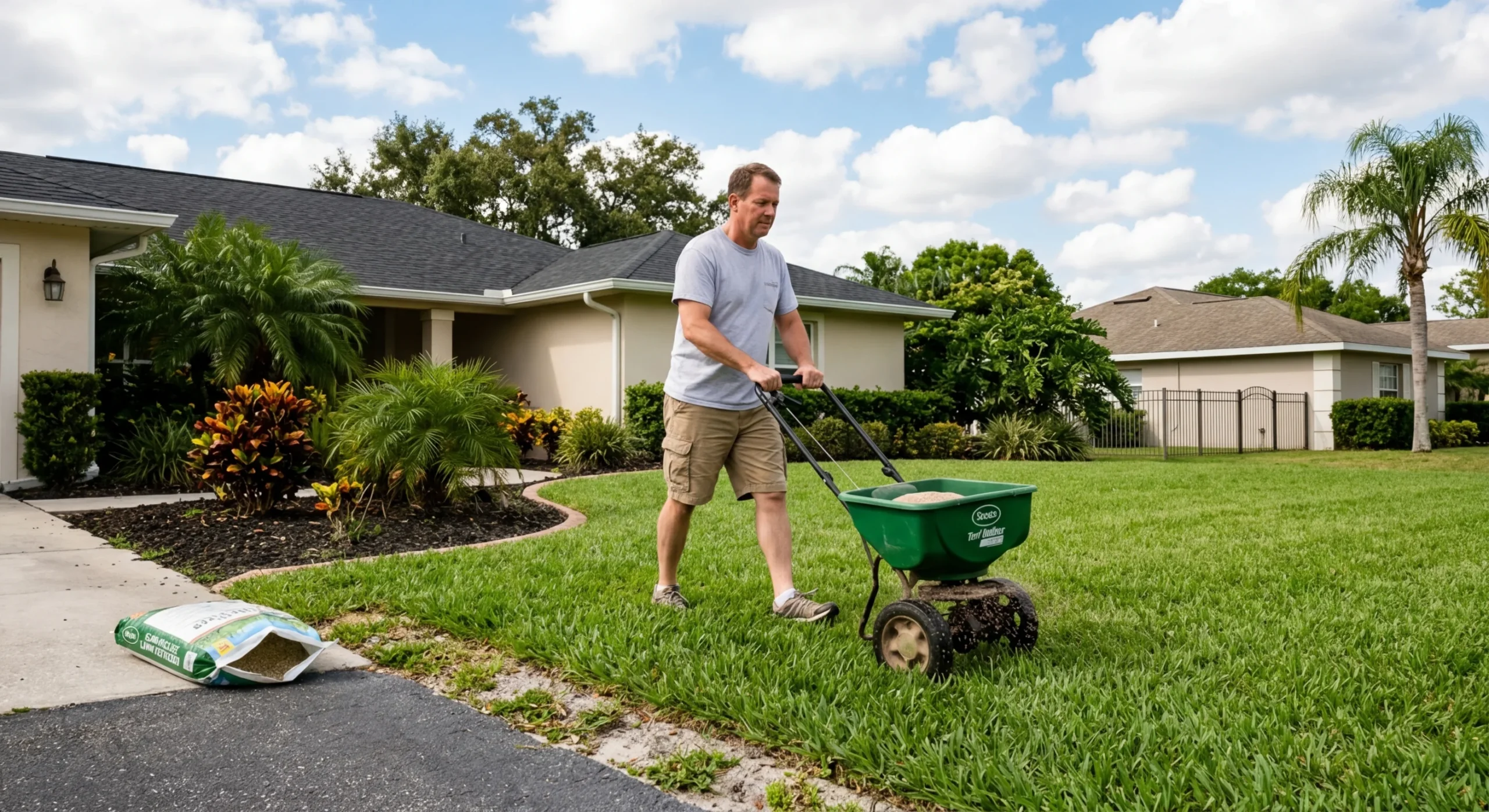
Central Florida’s sandy soil is beautiful to look at — and terrible at holding nutrients. That means your grass is always hungry. Regular fertilization isn’t optional here, it’s the difference between a lawn that looks good and one that looks rough by July.
I’ve put together a full seasonal breakdown in my guide on when to fertilize St. Augustine grass in Florida. Here’s the core schedule:
Central Florida Fertilizing Schedule
| Application | Timing | What to Use |
|---|---|---|
| Spring Application | Mid-April (once temps are consistently warm) | Slow-release nitrogen, no phosphorus |
| Summer Application | June–July (optional, if growth stalls) | Light nitrogen boost — avoid over-feeding in peak heat |
| Fall Application | Early October (last application before dormancy) | Potassium-rich blend to strengthen roots for cooler months |
| Winter | Skip it | Dormant grass cannot use fertilizer — it runs off and pollutes waterways |
UF IFAS recommends using slow-release nitrogen fertilizers that contain no phosphorus for most Central Florida soils, which are already phosphorus-rich. Applying phosphorus here contributes to water pollution through runoff — and it’s often not needed at all.
What to Look for on the Bag
- Slow-release nitrogen — feeds steadily over weeks, no growth spikes, no burn
- Zero or low phosphorus (the middle number) — Central Florida soil is already phosphorus-heavy
- Potassium for fall — builds root strength and disease resistance heading into cooler months
Want a deeper look at which products actually work in this region? My post on the best fertilizer for St. Augustine grass in Central Florida breaks it down by brand, ratio, and season.
4. Lawn Pests: What to Watch For
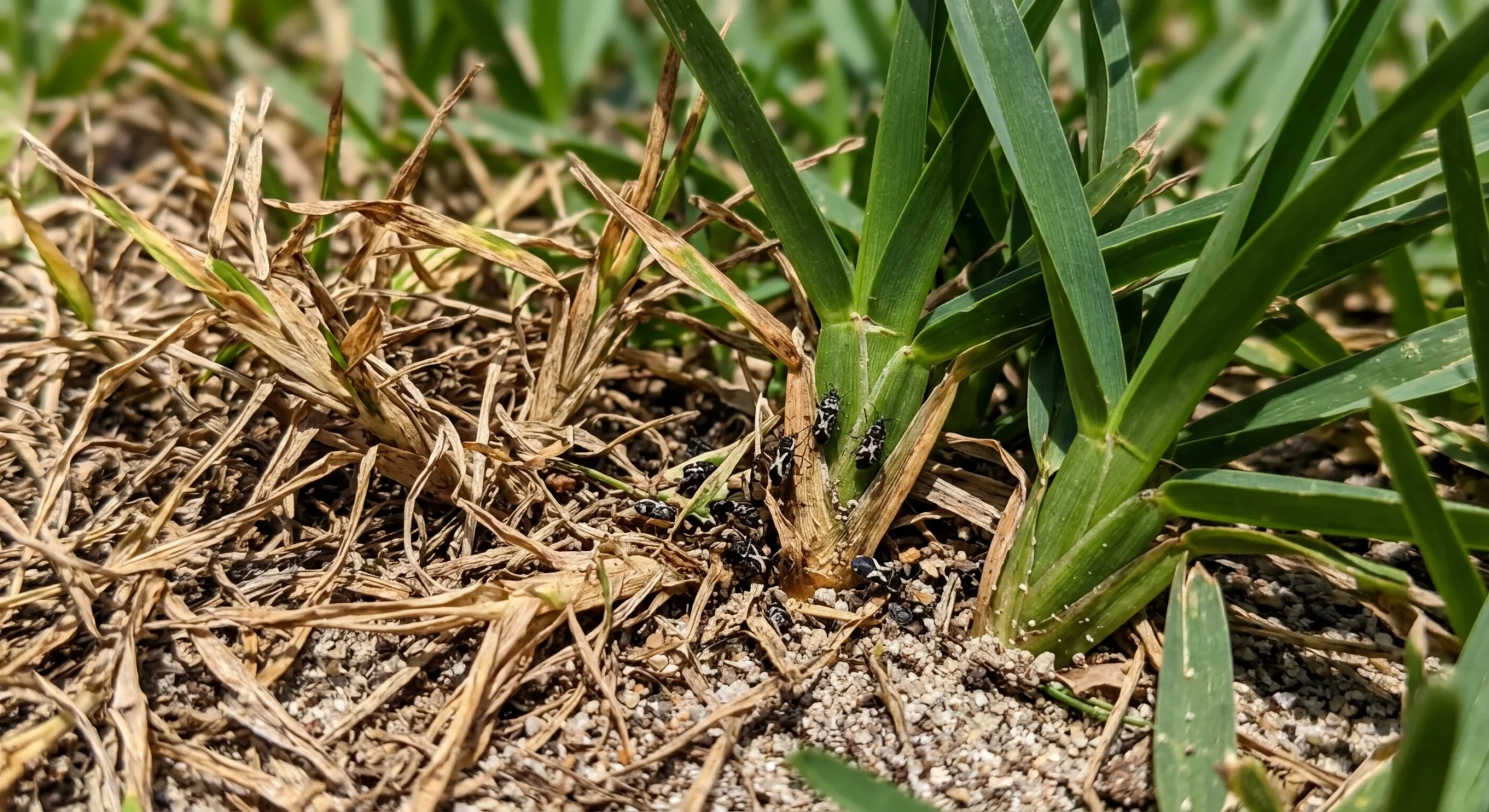
Central Florida’s warm, humid climate is paradise for lawn pests. If you have St. Augustine grass, you’re going to deal with chinch bugs at some point. It’s not a matter of if — it’s when. Knowing what you’re looking at before the damage spreads is everything.
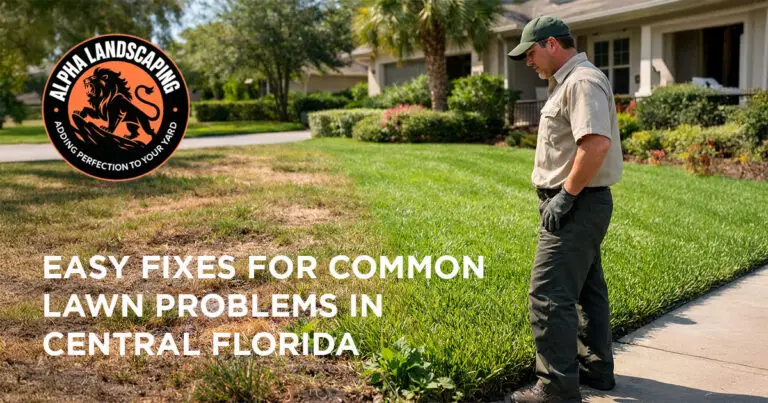
I cover this in detail in my article on easy fixes for common lawn problems in Central Florida. Here’s the fast breakdown:
The Big Three Lawn Pests in Central Florida
| Pest | Grass Affected | Signs | Peak Season |
|---|---|---|---|
| Chinch Bugs | St. Augustine | Irregular yellow-to-brown patches spreading outward, often near driveways or sunny edges | June – September |
| Sod Webworms | St. Augustine, Bahia, Zoysia | Ragged brown patches, small moths flying just above grass at dusk | Spring and Fall |
| Mole Crickets | Bahia primarily | Spongy, raised tunnels near the surface, dead patches, spongy feel underfoot | Spring – Early Summer |
The Chinch Bug Test
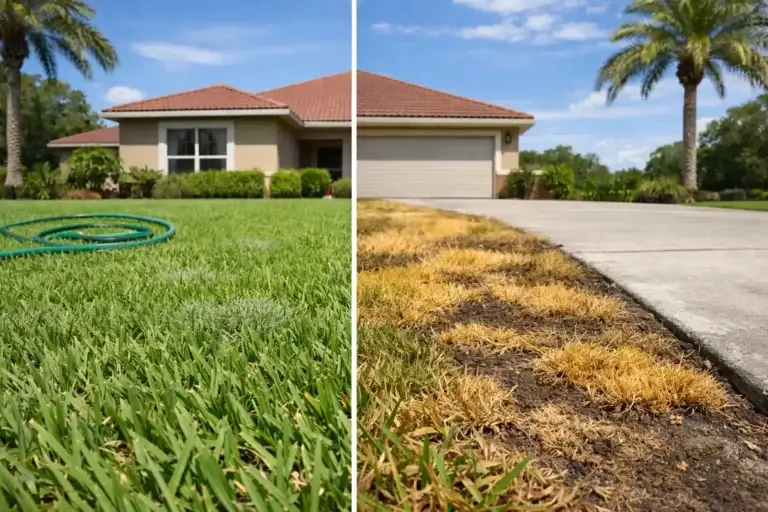
If you see brown patches spreading near a sidewalk or driveway edge in summer, get on your knees and part the grass at the edge of the brown area. If you see tiny black-and-white bugs moving around — that’s chinch bugs. They pull moisture out of the grass blade and kill it fast. Act quickly. A professional treatment in the early stages saves your lawn. Waiting costs you a full re-sod.
Fungal Disease vs. Pests
Brown patches aren’t always bugs. High humidity near bodies of water — like in Kissimmee near Lake Tohopekaliga or in Groveland near the Green Swamp — creates ideal conditions for brown patch fungus. Fungal damage tends to look more circular and appear after heavy rain or nighttime irrigation. Pest damage tends to be more irregular and spread from the edges inward. When in doubt, get it diagnosed before treating — the wrong product wastes your money and stresses the turf further.
5. Seasonal Lawn Care Calendar for Central Florida
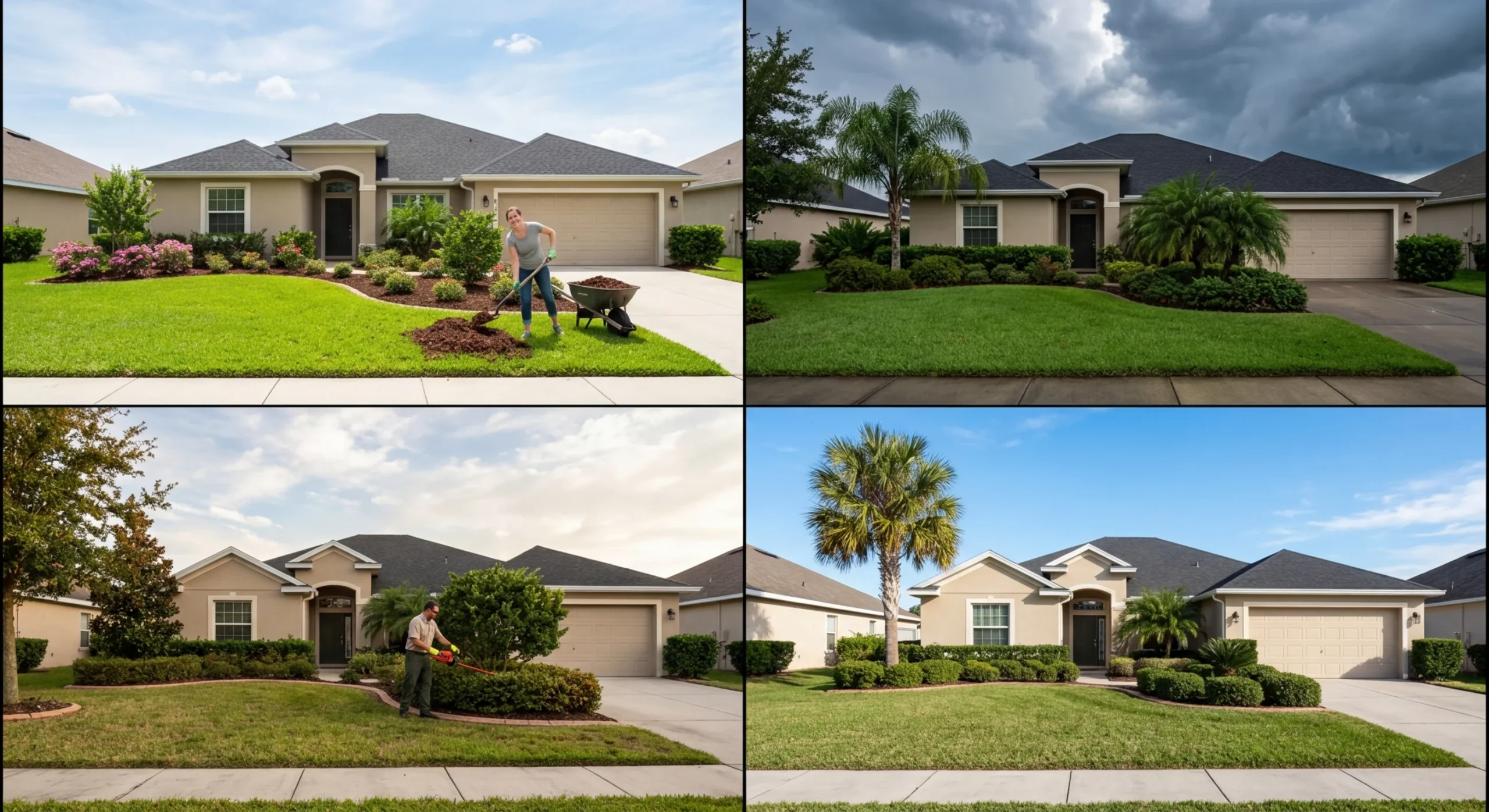
One of the biggest differences between Florida lawn care and everywhere else: we don’t get a real winter break. Your lawn needs attention 12 months a year. Here’s exactly what to do and when.
Spring (March – May): Wake-Up Season
- Resume weekly mowing as growth picks back up
- Apply first fertilizer application in mid-April — slow-release nitrogen, no phosphorus
- Scout for chinch bugs and sod webworms as temperatures climb
- Apply pre-emergent herbicide in late February/early March to block summer weeds before they germinate
- Check irrigation heads — repair any broken or misdirected sprinklers before the dry season
- Schedule fresh mulch and spring yard cleanup to refresh beds and retain moisture
Summer (June – September): Peak Growth and Pest Pressure
- Weekly mowing is non-negotiable — grass grows fast and goes off the rails quickly
- Water early morning only — evening watering promotes fungal disease
- Watch for chinch bugs constantly — peak damage window is July and August
- Avoid fertilizing in extreme heat — it can burn the lawn; wait for a cooler stretch if needed
- Trim hedges and shrubs regularly — they grow fast in summer too
- Check for irrigation failures after storms — a knocked sprinkler head in July can mean dead grass by August
My St. Augustine grass summer care guide goes deep on exactly what your lawn needs from June through September.
Fall (October – November): Strengthen and Slow Down
- Apply final fertilizer in early October — potassium-rich blend to build root strength heading into cooler months
- Reduce mowing frequency as growth slows after mid-October
- Treat any remaining fungal issues before humidity drops
- Schedule tree trimming — fall is a great window before the dry season and before holiday storms
- Clean up debris from summer storms — dead branches, excess thatch, clogged drainage areas
Winter (December – February): Don’t Ignore It
- Do NOT fertilize — dormant grass cannot use it, and it runs off into waterways
- Bi-weekly mowing is usually enough, but don’t skip entirely — warm spells push new growth
- This is the best window for hardscape and landscape design projects — cooler temps, less rain, easier install
- Check irrigation system and winterize if needed
- The best time to prune most shrubs and trees is late winter — see my post on the best time to prune evergreen shrubs and on the best time to trim trees in Central Florida
6. Mulching and Seasonal Yard Cleanup
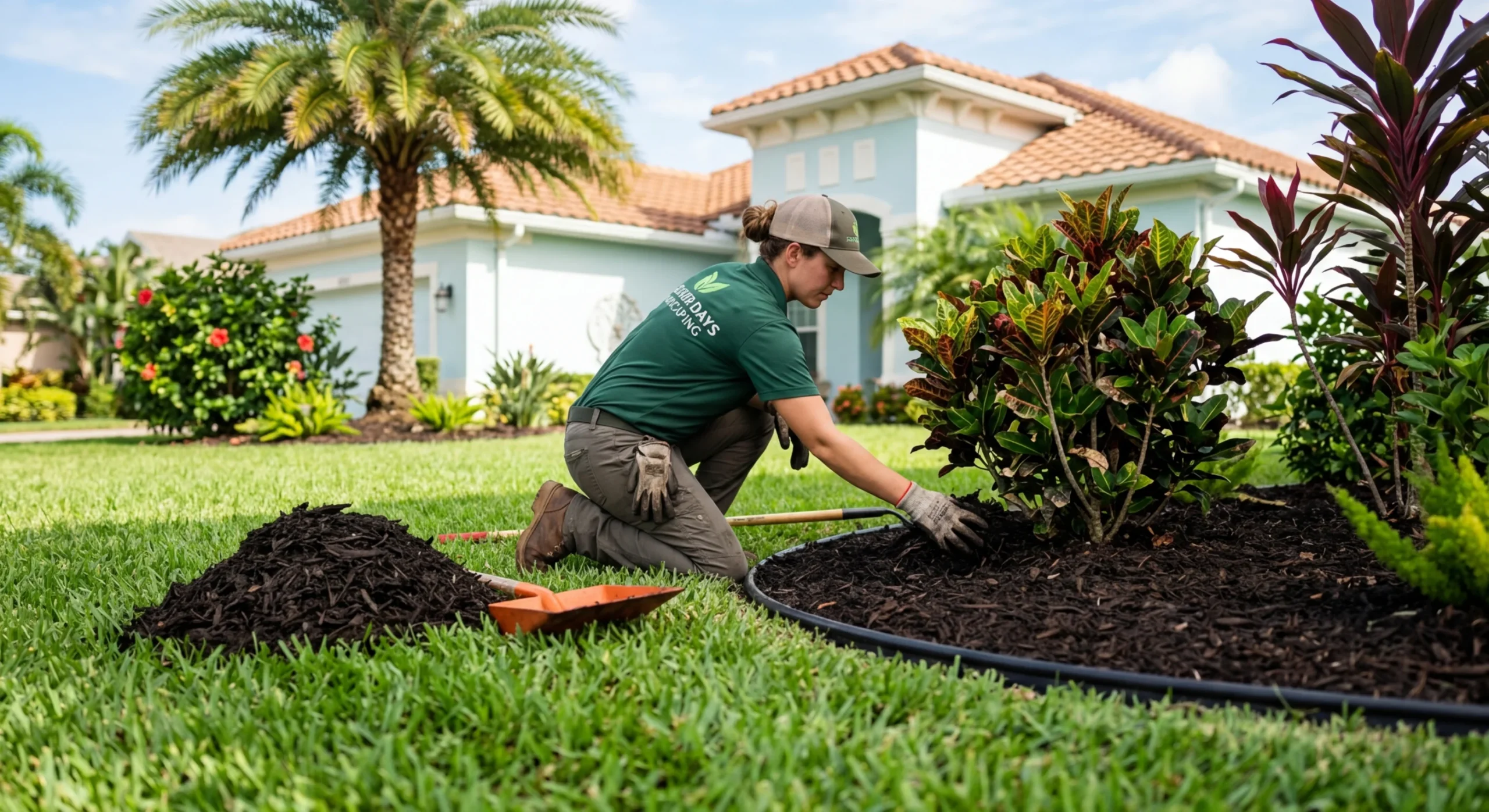
Mulch is one of the most overlooked tools in Central Florida lawn care. A fresh layer in spring does three things at once: it slows moisture loss from the sandy soil, blocks weeds from getting established in your beds, and gives the whole property a clean, finished look that matters a lot in HOA communities and vacation rental markets.
Mulching Best Practices for Central Florida
- Apply 2 to 3 inches deep — enough to block light from weed seeds, but not so thick it suffocates roots
- Keep mulch away from tree trunks and plant stems — “mulch volcanoes” trap moisture and rot the base
- Best timing: Early spring before the rainy season begins, and fall after the first cooler stretch
- Best mulch type for Central Florida: Eucalyptus or melaleuca mulch — both are locally sourced, resist pests, and break down slowly in Florida’s humidity
Seasonal yard cleanups go hand-in-hand with mulching — clearing out dead growth, trimming back overgrown beds, and hauling away debris that builds up through the storm season. My team handles both as part of our mulching and seasonal yard cleanup service.
7. HOA Lawn Care: What You Need to Know in Florida
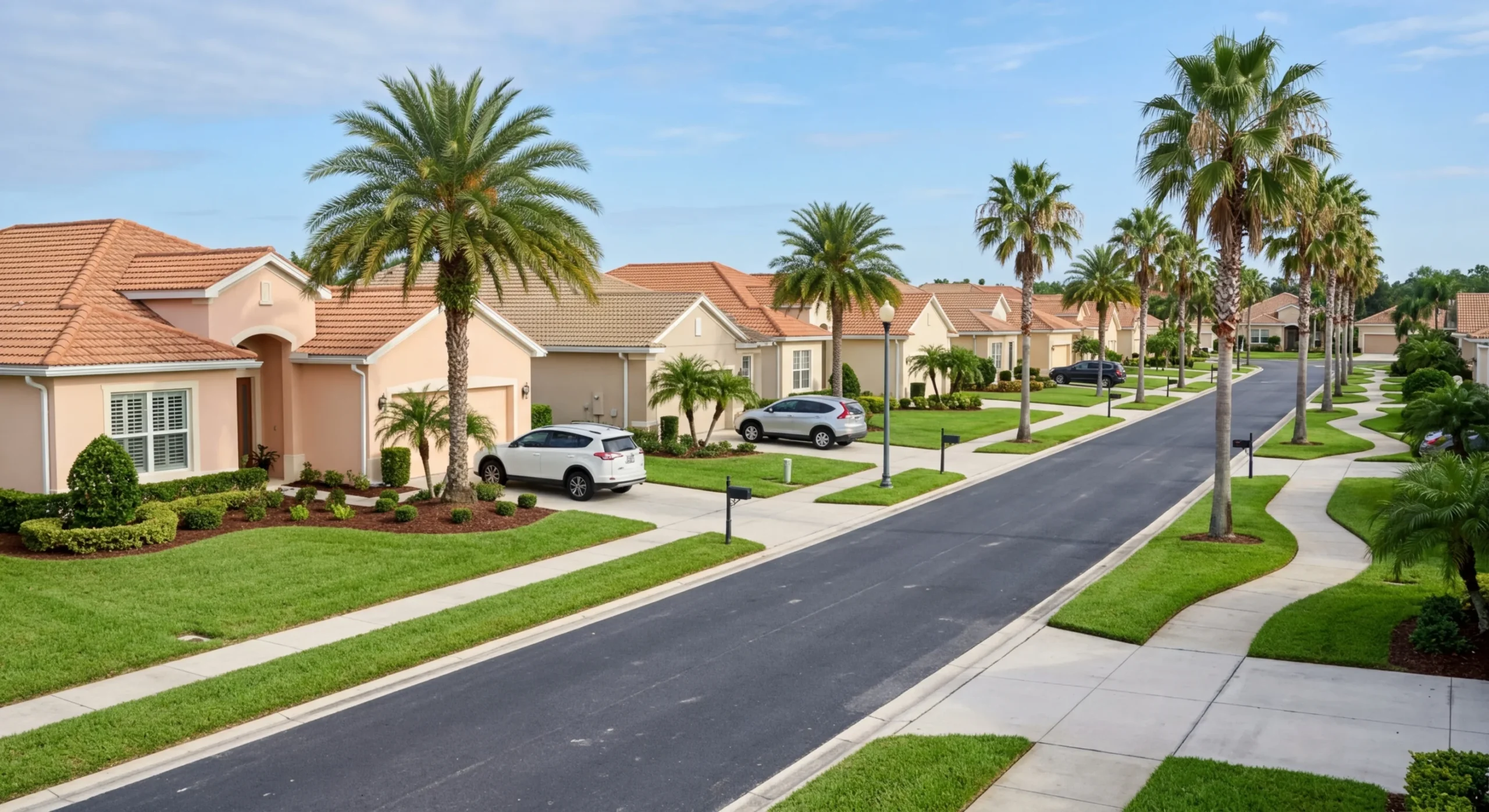
If you live in an HOA community — and in Central Florida, there’s a good chance you do — your lawn care isn’t just about looks. It’s a legal and financial matter. I see homeowners get hit with fines every year because they fell behind on mowing during summer or let their hedges go for a few weeks too long. It adds up fast.
What Florida HOAs Can Fine You For
Under Florida Statute 720.305 and HB 1203 (effective July 1, 2024), HOAs can fine homeowners for lawn and landscape violations including:
- Grass that exceeds the height specified in community documents
- Overgrown or unshapely hedges and shrubs
- Bare patches or dead turf not addressed in a timely manner
- Mulch beds that are bare, weedy, or not maintained
- Any landscaping that doesn’t meet the community’s appearance standards
How Much Can They Fine You?
Under current Florida law, HOA fines are capped at $100 per violation per day, with a maximum aggregate of $1,000 — unless your community’s governing documents allow higher amounts. The HOA must provide at least 14 days’ written notice before imposing a fine. If you cure the violation before the hearing, the fine cannot be imposed. If you ignore it, it can escalate to a lien on your property.
The Easiest Way to Stay Compliant
Consistent, weekly lawn service during the growing season is the single best way to stay out of HOA trouble. A professional crew on a set schedule means your property is always within compliance window. We maintain properties in HOA communities across Kissimmee, Four Corners, Davenport, and throughout Polk and Osceola Counties — and we know exactly what each community’s board expects.
8. When to Hire a Professional Lawn Care Company
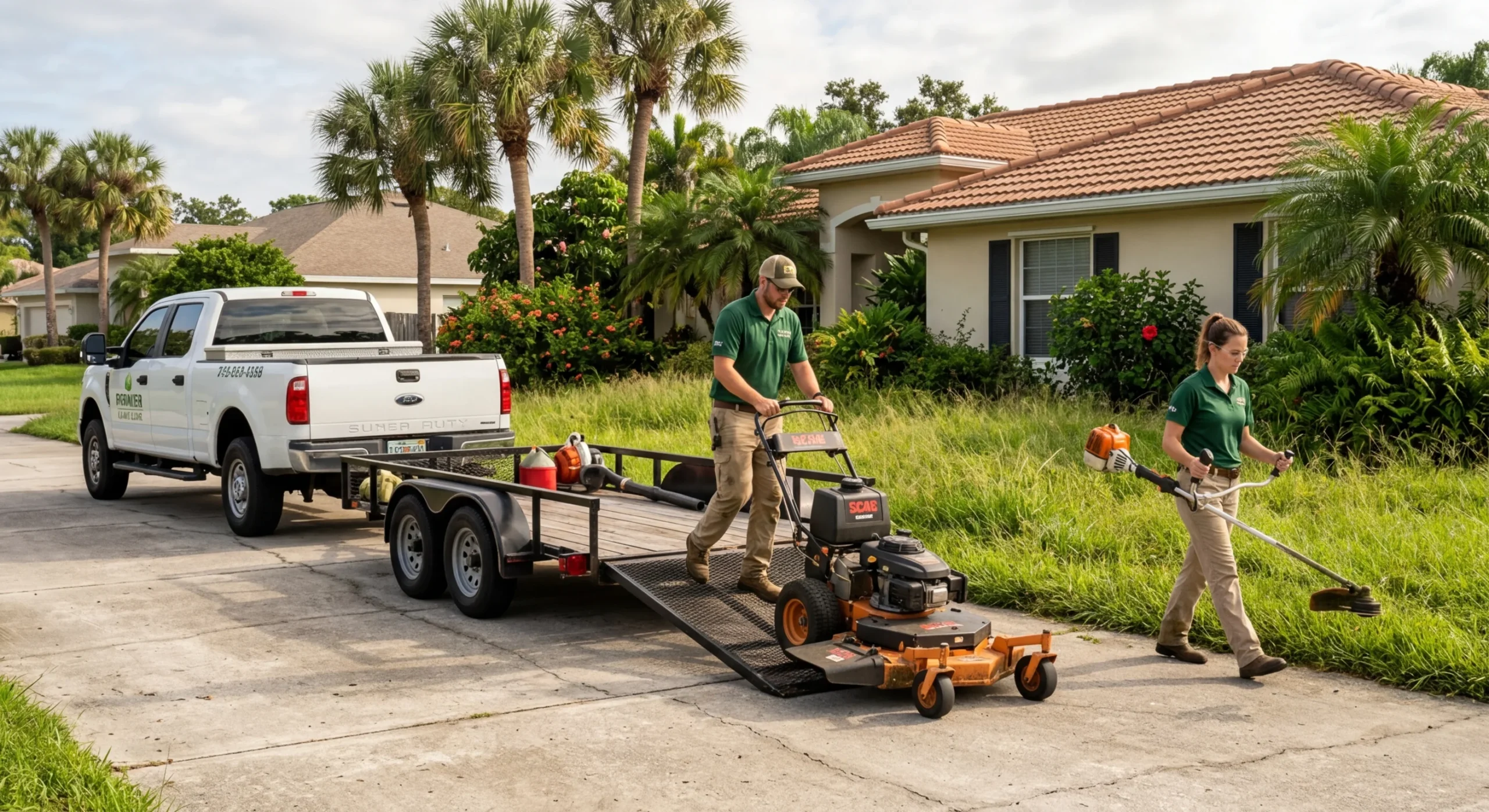
I wrote a straight-talk breakdown of this in my post on DIY lawn care vs. hiring a professional in Florida. Here’s the short version:
Hire a Pro If…
- You can’t commit to weekly mowing from March through October — missing mows in summer creates compounding problems fast
- You’ve had recurring brown patches, pest damage, or fungal issues that DIY treatments haven’t fixed
- You’re in an HOA community and have received a violation notice — or want to make sure you never do
- You manage a vacation rental or commercial property where appearance is directly tied to income and guest reviews
- Your property has large trees, mature palms, or complex hedgework that needs professional-grade equipment
- You want it done right and don’t want to spend your weekend doing it yourself
What a Good Lawn Care Company Does That DIY Can’t Replicate
- Consistent scheduling — shows up even when life gets busy
- Commercial-grade equipment that cuts cleaner and causes less stress on turf
- Trained eyes that catch pest and disease problems early, before they spread
- Clean edges on sidewalks and driveways that make the whole property look sharp
- Accountability — if something isn’t right, you have someone to call
9. Where Alpha Landscaping LLC Serves in Central Florida
We’re based in Davenport and serve residential and commercial properties across all of Polk and Osceola Counties. If you’re looking for a reliable crew in your area, here’s where we work:
- Davenport, FL — Our home base. We know every neighborhood out here.
- Kissimmee, FL — HOA communities, vacation rentals, residential and commercial across Osceola County.
- Four Corners, FL — Resort communities, ChampionsGate, Reunion, Solterra, and surrounding neighborhoods across all four counties.
- Clermont, FL — Lake County properties along the US-27 corridor and surrounding communities.
- Groveland, FL — Master-planned communities and established neighborhoods in western Lake County.
- Haines City, FL — Polk County residential and commercial properties.
- Minneola, FL — Growing Lake County communities along the 27 corridor.
Don’t see your city? View our full service area map or contact us — we may still be able to help.
10. Central Florida Lawn Care FAQs
How often should I mow my lawn in Central Florida?
Weekly from March through October. Bi-weekly or as needed from November through February. Even in the slower months, don’t skip entirely — warm spells push growth year-round in Central Florida.
What is the best grass for Central Florida?
St. Augustine (Floratam) is the most popular and does well across Polk, Osceola, and Lake Counties when properly maintained. Bahia is the low-maintenance pick for larger lots. Zoysia gives the thickest, most polished look for HOA communities. The right choice depends on your lot size, irrigation, shade, and how much maintenance you want to put in.
When should I fertilize my lawn in Central Florida?
Mid-April for the spring application and early October for the fall application, according to UF IFAS Polk County. Use a slow-release nitrogen fertilizer with no phosphorus. Skip winter fertilizing entirely — dormant grass can’t use it and it just runs off.
What lawn pests are most common in Central Florida?
Chinch bugs are the biggest threat to St. Augustine lawns — peak season is June through September. Sod webworms hit in spring and fall. Mole crickets are the main issue for Bahia grass. Catch any of these early and treatment is straightforward. Wait too long and you’re looking at re-sod.
Can my HOA fine me for lawn care violations in Florida?
Yes. Under Florida Statute 720.305 and HB 1203 (effective July 1, 2024), HOAs can fine up to $100 per violation with a $1,000 aggregate cap. They must provide 14 days’ notice before imposing any fine. Consistent professional lawn care is the easiest way to stay out of trouble.
How do I know when to hire a professional?
If you’re missing mows during summer, dealing with recurring pest or disease problems, managing an HOA property, or running a vacation rental — hire a pro. The cost of consistent professional service is almost always less than the cost of re-sodding a lawn that went wrong or paying HOA fines. See my full breakdown: DIY lawn care vs. hiring a professional in Florida.
Ready to Get Your Central Florida Lawn on Track?
You’ve got the knowledge. Now you need a crew that shows up, does the work right, and keeps your property looking sharp every single week — not just when it’s convenient.
That’s what Alpha Landscaping LLC has been building since 2020. Family-owned, licensed, insured, and built on fair pricing and straight communication. No long-term contracts. No surprises on the invoice.
Request your free estimate today.
Have questions first? Contact us here or learn more about our team and story.
Bookmark this Central Florida lawn maintenance guide and come back whenever your yard is throwing you a curveball — and if you’d rather just hand it off to a crew that knows what they’re doing, give us a call at (352) 702-6361.
Alpha Landscaping LLC
1010 Green Cypress Loop
Davenport, FL 33837
(352) 702-6361