St. Augustine Grass Care in Florida: The Complete Year Round Maintenance Schedule
St. Augustine grass care in Florida comes down to doing the right thing at the right time. Miss a window and you’re playing catch up all season. I’m Austin Halsey, owner of Alpha Landscaping LLC, and I’ve been maintaining St. Augustine lawns across Polk and Osceola Counties since 2020.
This is the grass that covers the majority of yards in our area, and after years of working on it in Florida’s heat, rain, and sandy soil, I can tell you exactly what it needs and when it needs it.
This page is your one stop reference for everything related to caring for St. Augustine grass in Central Florida. I’ve organized it by season and linked to our detailed guides on each topic so you can dig deeper wherever you need to. Bookmark this page. Come back to it when the seasons change. It’s built to be your year round playbook.
What Makes St. Augustine Grass Different in Florida
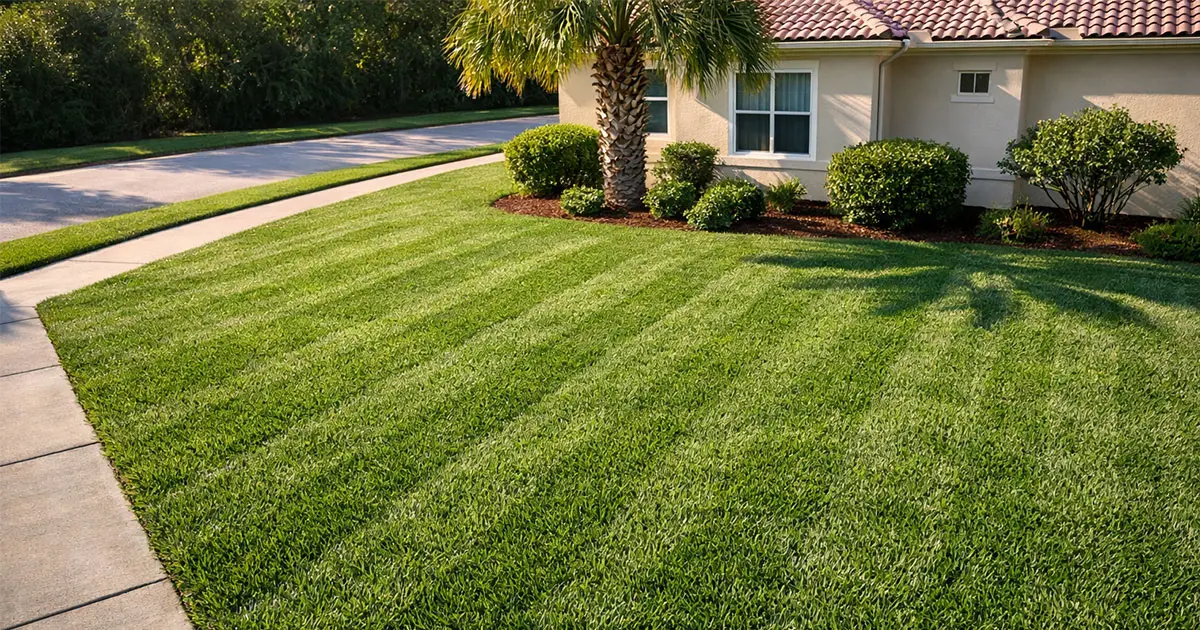
St. Augustine (Stenotaphrum secundatum) is the most widely planted lawn grass in Florida, according to the University of Florida IFAS Extension. It produces a thick, dark green carpet that handles heat and humidity well, tolerates moderate shade, and spreads by stolons (above ground runners) to fill in bare spots on its own.
But St. Augustine is also demanding. It needs consistent mowing at the right height, regular fertilization on a specific schedule, careful watering (especially on Florida’s sandy soil), and vigilant pest monitoring because chinch bugs treat it like a buffet.
Here in Central Florida, our growing season runs roughly from March through October, with the grass going semi dormant (but rarely fully dormant) from November through February. That means lawn care never completely stops, it just shifts gears.
The most common St. Augustine varieties in Central Florida are Floratam (the standard for sunny yards), Palmetto (better shade tolerance), and CitraBlue (newer variety with improved disease resistance). The care schedule below applies to all of them, with minor variations noted where they matter.
Year Round Maintenance Calendar at a Glance
Here’s the big picture before we break each season down in detail:
| Season | Season | Watering | Fertilizing | Pest Watch | Weed Control |
|---|---|---|---|---|---|
| Winter (Dec to Feb) | Every 2 to 4 weeks, 3 to 4 inches | Only to prevent desiccation | None (grass is semi dormant) | Minimal activity | Post emergent for winter weeds if needed |
| Spring (Mar to May) | Every 7 to 10 days, 3.5 to 4 inches | Twice per week as growth resumes | Twice per week as growth resumes | Watch for chinch bugs starting in April | Pre emergent by March 1 if crabgrass was a problem |
| Summer (Jun to Sep) | Every 5 to 7 days, 3.5 to 4 inches | Twice per week, supplement rain gaps | Slow release in June, iron only in July/August | Peak chinch bug and sod webworm season | Spot treat only, avoid chemicals in extreme heat |
| Fall (Oct to Nov) | Every 10 to 14 days, 3 to 4 inches | Reduce as growth slows | Final application early October | Monitor for lingering chinch bug activity | Pre emergent for winter weeds in October |
Now let’s break each category down in detail.
Watering: The Balancing Act on Sandy Soil
Central Florida’s sandy soil drains fast. That’s both a blessing (less standing water) and a challenge (nutrients and moisture vanish quickly). St. Augustine grass needs about 3/4 to 1 inch of water per week during the growing season.
How to Water Right
- Water deeply but less often. Two deep soakings per week beats daily light sprinkles. Deep watering encourages roots to grow down, making your lawn more drought resistant.
- Water in the early morning. Watering between 4am and 10am gives the grass time to absorb moisture before the afternoon heat and reduces the risk of fungal disease from overnight dampness.
- Adjust for rainfall. If you got a good afternoon thunderstorm, skip the sprinkler. Check your soil moisture before watering on autopilot.
- Check your local water restrictions. Polk County follows Southwest Florida Water Management District guidelines. Lake County follows St. Johns River Water Management District rules. Both generally limit residential irrigation to two days per week.
Signs Your Lawn Needs Water
St. Augustine tells you when it’s thirsty. Look for blades that fold in half lengthwise (like a taco), a blue gray color shift, and footprints that stay visible after you walk on it. Water within 24 hours of seeing these signs.
New Sod Is Different
Freshly installed sod needs a completely different watering schedule for the first 90 days. We cover this in detail: new sod care guide for Florida.
Fertilizing: Feed It Right, Feed It on Time
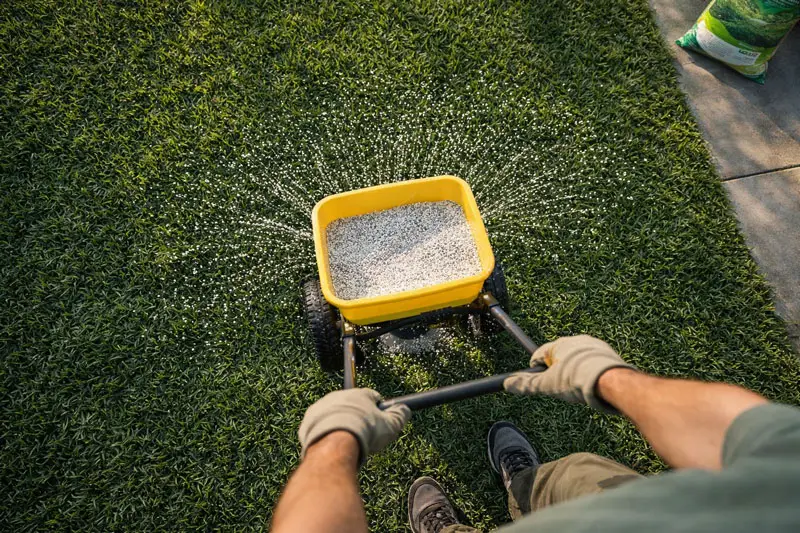
St. Augustine needs between 2 and 4 pounds of nitrogen per 1,000 square feet annually, with lawns on sandy soil (most of Central Florida) landing closer to the 3 to 4 pound range. But timing and product selection matter just as much as quantity.
The Four Fertilization Windows
- Spring Green Up (Late April to Early May): First feeding of the year. Wait until you’ve mowed at least twice. Use a complete fertilizer like 16-4-8 at 1 lb nitrogen per 1,000 sq ft.
- Early Summer (Late May to Early June): Second feeding before rainy season hits. Use slow release nitrogen, 0.5 to 1 lb per 1,000 sq ft.
- Late Summer (August to Early September): Recovery feeding after peak heat. Slow release, 0.5 to 1 lb per 1,000 sq ft.
- Fall (Early to Mid October): Final feeding before dormancy. 1 lb nitrogen per 1,000 sq ft. Helps the grass store energy for winter and green up faster next spring.
For month by month timing details: when to fertilize St. Augustine grass in Florida.
For product recommendations with real test results: best fertilizer for St. Augustine grass in Central Florida.
The Summer Iron Trick
In July and August, skip the nitrogen. Instead, use iron sulfate or chelated iron to maintain that dark green color without pushing the excessive growth that attracts chinch bugs and disease. This is one of the most valuable things I’ve learned from years of maintaining lawns in Florida’s hottest months. We cover this in depth in our St. Augustine grass summer care guide.
Polk County Fertilizer Rules
Polk County’s fertilizer ordinance requires slow release nitrogen, limits application to 1 lb per 1,000 sq ft per application, and prohibits fertilizing within 10 feet of any water body. There’s no full summer blackout, but you cannot fertilize during severe weather warnings or when heavy rain (2+ inches in 24 hours) is expected.
Pest Control: Chinch Bugs Are Enemy Number One
The southern chinch bug is the most damaging insect pest of St. Augustine grass in Florida. They suck the sap from grass blades, inject a toxin, and leave behind brown dead patches that spread outward from a central point, usually in the sunniest areas of your yard.
How to Spot Chinch Bug Damage
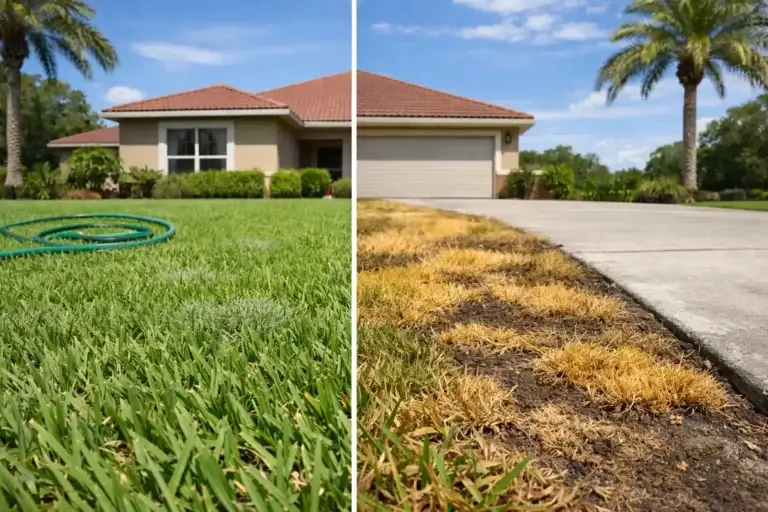
The tricky part is that chinch bug damage looks a lot like drought stress. Both cause browning. The difference: drought stress shows up uniformly across the yard, while chinch bug damage starts in a sunny spot and spreads outward in an irregular pattern. The edges of the brown area will have yellowing grass that’s in the process of dying.
We wrote a full guide on telling them apart: chinch bug damage vs drought stress in Florida.
Other Pests to Watch For
- Sod webworms — Create small brown patches and leave silk webbing near the soil surface. Most active in summer.
- Armyworms — Can strip grass blades overnight in large numbers. Watch for them after warm, wet periods.
- Grubs (white grubs) — Feed on roots below the soil surface. You’ll notice the turf feels spongy and can be pulled up like a carpet. August is the best time to treat.
- Mole crickets — Create tunnels and soft mounds. More common in Bahia but can affect St. Augustine too.
The Overfertilization Connection
Here’s something most homeowners don’t know: too much nitrogen makes your lawn more attractive to chinch bugs. Research from the University of Florida found that chinch bug populations increase on heavily fertilized St. Augustine turf. That’s why I stress following the fertilization schedule above and using iron (not nitrogen) during peak summer months.
Weed Control: Prevention Beats Reaction
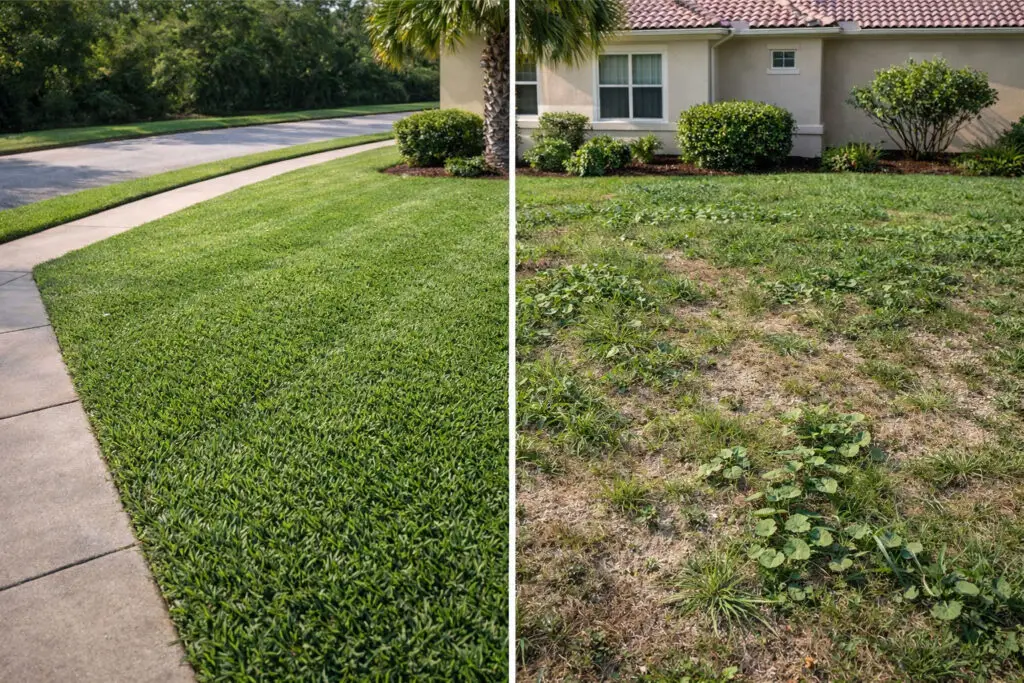
A thick, healthy, properly mowed St. Augustine lawn is your best weed defense. When the turf is dense and tall (3.5 to 4 inches), weeds have a hard time getting established. Most weed problems I see in Haines City, Davenport, and Clermont come from lawns that are mowed too short or have thinned out from neglect or pest damage.
Pre Emergent Herbicides
If crabgrass was a problem last year, apply a pre emergent labeled for St. Augustine by March 1 in Central Florida. A second application in early October helps prevent winter annual weeds.
Post Emergent Herbicides
For existing broadleaf weeds (dollar weed, clover, etc.), use a post emergent herbicide labeled safe for St. Augustine. Be careful with products containing 2,4-D, which can damage St. Augustine if applied incorrectly or in temperatures above 85°F.
Important Caution
Never apply herbicides to newly installed sod until you’ve mowed at least 3 to 4 times. New sod is sensitive to chemicals and you can cause more damage than the weeds would. For more common lawn issues and their fixes: easy fixes for common lawn problems in Central Florida.
Season by Season Deep Dive
Winter (December Through February)
St. Augustine goes semi dormant in Central Florida during winter. The grass slows way down and may turn a lighter green or straw color, but it rarely goes fully brown the way it does in North Florida.
- Mowing: Every 2 to 4 weeks as needed. Keep blades at 3 to 4 inches. Do not scalp.
- Watering: Only if conditions are dry and windy for extended periods. Avoid overwatering dormant grass.
- Fertilizing: Do not apply nitrogen during dormancy. It pushes growth the grass can’t sustain and wastes money.
- Pest control: Minimal activity. Cold keeps most pests at bay.
- Weed control: Treat winter weeds (chickweed, henbit) with a post emergent labeled for St. Augustine if needed.
- Good time to: Get a soil test done so you know your nutrient levels before spring fertilization.
Spring (March Through May)
This is when your lawn wakes up and the work ramps up fast.
- Mowing: Resume weekly mowing as growth picks up. Stay at 3.5 to 4 inches.
- Watering: Start regular irrigation as the dry season continues. Twice per week, deep soakings.
- Fertilizing: First application late April or early May, after your second mowing. Use a complete fertilizer (16-4-8 or 15-0-15).
- Pest control: Start monitoring for chinch bugs in April, especially in sunny areas. Check every two weeks through the season.
- Weed control: Pre emergent by March 1 if crabgrass was an issue. Spot treat broadleaf weeds as they appear.
- Good time to: Patch bare spots with sod or plugs. Apply starter fertilizer to any new plantings.
Summer (June Through September)
Peak growing season. This is when your lawn looks its best or falls apart, depending on how it’s maintained.
- Mowing: Every 5 to 7 days. Stay at 3.5 to 4 inches. Alternate mowing patterns to prevent ruts.
- Watering: Twice per week, supplementing rainfall gaps. Monitor soil moisture. Don’t rely on the timer alone.
- Fertilizing: Slow release application in early June. Switch to iron only in July and August. Resume slow release nitrogen in late August or early September.
- Pest control: Peak chinch bug and sod webworm season. Check weekly. Treat fast if you see brown patches spreading in sunny areas.
- Weed control: Spot treat only. Avoid blanket herbicide applications in extreme heat above 85°F.
- Watch for: Gray leaf spot (fungal disease common during the summer rainy season on new growth). Large patch fungus in humid conditions.
Full summer guide here: St. Augustine grass summer care guide.
Fall (October Through November)
Growth slows, pests wind down, and you’re preparing your lawn for winter.
- Mowing: Every 10 to 14 days. Keep at 3 to 4 inches.
- Watering: Reduce frequency as temperatures cool and rain decreases.
- Fertilizing: Final nitrogen application in early to mid October. Use slow release. This helps the grass store energy for winter and green up faster next spring.
- Pest control: Monitor for lingering chinch bug activity. Treat if needed.
- Weed control: Apply pre emergent in October for winter annual weed prevention.
- Good time to: Clean up the yard, remove debris, and apply a fresh layer of mulch around landscape beds.
DIY or Hire a Pro?
Some homeowners want to do it all themselves. Others want their weekends back. Both are valid. I wrote a full breakdown of the real costs, time commitment, and trade offs: DIY lawn care vs hiring a professional in Florida.
If you decide professional care makes sense, Alpha Landscaping LLC offers weekly and biweekly maintenance plans across all of Polk and Osceola Counties, plus Lake County communities including Clermont, Groveland, and Minneola. We also serve Davenport, Four Corners, Haines City, and Kissimmee.
Related Guides from Alpha Landscaping
Each of these goes deeper into a specific aspect of St. Augustine care. Consider this page your hub and these guides your deep dives:
- Best Mowing Height for St. Augustine Grass in Central Florida
- When to Fertilize St. Augustine Grass in Florida (Month by Month Schedule)
- Best Fertilizer for St. Augustine Grass in Central Florida
- St. Augustine Grass Summer Care Guide
- Chinch Bug Damage vs Drought Stress in Florida
- Easy Fixes for Common Lawn Problems in Central Florida
- New Sod Care Guide for Florida (First 90 Days)
- DIY Lawn Care vs Hiring a Professional in Florida
Frequently Asked Questions About St. Augustine Grass Care in Florida
How often should I mow St. Augustine grass in Florida?
Every 5 to 7 days during summer, every 7 to 10 days in spring, every 10 to 14 days in fall, and every 2 to 4 weeks in winter. Always follow the one third rule.
What height should St. Augustine grass be cut in Florida?
Between 3.5 and 4 inches for standard varieties like Floratam. Shaded areas should stay closer to 4 inches. Full details: best mowing height guide.
How much water does St. Augustine need per week?
About 3/4 to 1 inch per week during the growing season. Two deep waterings per week are better than daily light sprinkles, especially on sandy soil.
When should I fertilize St. Augustine grass in Central Florida?
Four times per year: late April, late May/early June, August/early September, and early October. Full schedule: when to fertilize St. Augustine grass in Florida.
What is the best fertilizer for St. Augustine grass?
On sandy Central Florida soil, products like Lesco 15-0-15 and Sunniland 24-0-11 perform well. Full product reviews: best fertilizer for St. Augustine grass.
Why does my St. Augustine lawn turn brown in summer?
Usually chinch bugs, heat stress, improper mowing height, or underwatering. Our guide on chinch bug damage vs drought stress helps you figure out which one.
Can I fertilize St. Augustine grass in summer?
In Polk County, yes, but use slow release nitrogen only and follow the county fertilizer ordinance. Better yet, use iron in July and August for color without the risks of high nitrogen during peak pest season.
I just got new sod. What do I do?
New sod has a completely different care schedule for the first 90 days. Full walkthrough: new sod care guide for Florida.
Should I hire a professional for St. Augustine grass care?
If you’ve spent money on sod or if your lawn is struggling despite your efforts, professional weekly maintenance can make a real difference. Cost comparison: DIY vs professional lawn care in Florida.
Keep Your St. Augustine Lawn Healthy Year-Round
St. Augustine grass care in Florida is a year-round commitment, but it doesn’t have to be overwhelming. Follow the seasonal schedule on this page, use the linked guides for the details, and stay consistent. That’s the formula.
If you’re in Clermont, Davenport, Kissimmee, or the Four Corners area and want help keeping your St. Augustine lawn in top shape, Alpha Landscaping LLC is here for you. We’re a family owned business based in Davenport, and we’ve been caring for Central Florida’s St. Augustine lawns since 2020.
Call us at (352) 702-6361 or request a free quote online. And for more tips between visits, check out our full library of lawn care guides. St. Augustine grass care in Florida gets a lot easier when you know what to do and when to do it.