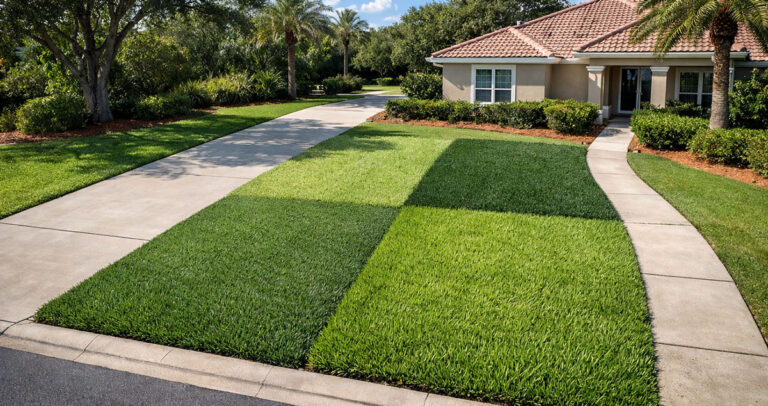
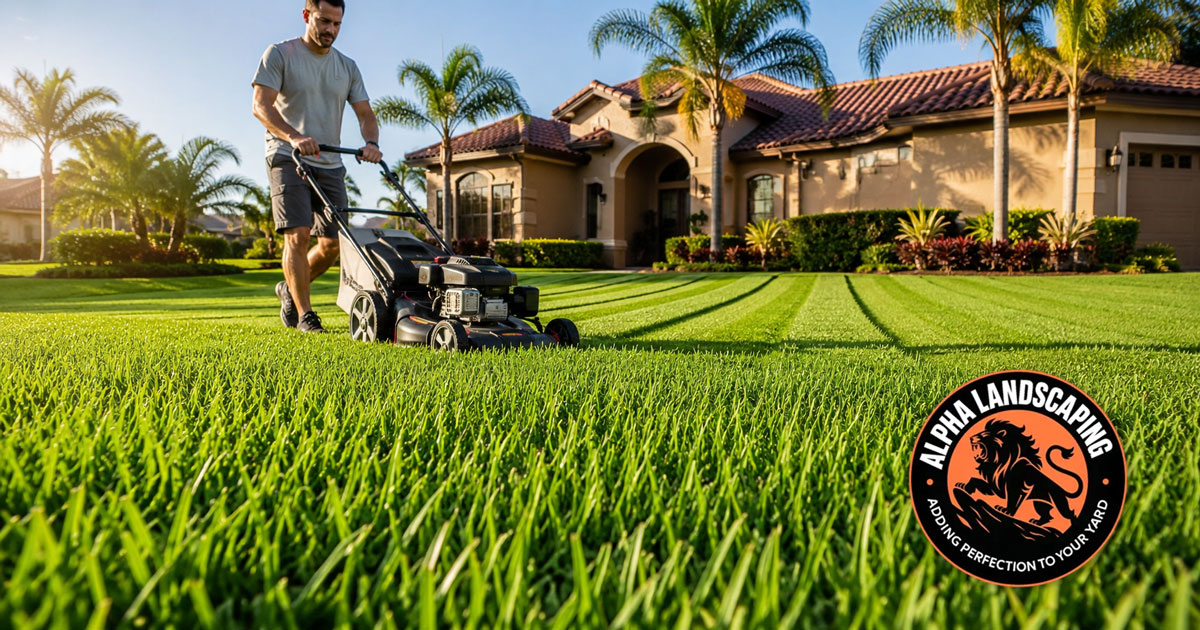
How Often to Mow St. Augustine Grass in Florida (Season by Season)
Quick answer: In Central Florida, you should mow St. Augustine grass once a week from March through October, and every 10 to 14 days from November through February. Keep the cutting height at 3.5 to 4 inches and never remove more than one-third of the blade in a single pass.
TL;DR
- Peak season (March–October): mow weekly
- Cool season (November–February): mow every 10–14 days
- Cutting height: 3.5–4 inches for Floratam and standard cultivars
- Golden rule: never cut more than 1/3 of the blade at once
- Yes, you still mow in a Florida winter. Your grass never fully goes to sleep here.
If you’re wondering how often to mow St. Augustine grass, you’re asking the right question. I’ve been cutting Central Florida lawns since I was a kid, and I can tell you that mowing on the wrong schedule is the fastest way to wreck a good lawn. Cut too often and you stress it. Cut too little and it gets shaggy, weedy, and weak. Let me walk you through exactly how I do it on the hundreds of yards we maintain across Polk and Osceola Counties.
I’m Austin Halsey, owner of Alpha Landscaping LLC. My team and I mow St. Augustine grass every single week, all year long. So this isn’t theory. This is what actually works on real Florida lawns.
How Often Should You Mow St. Augustine Grass in Central Florida?
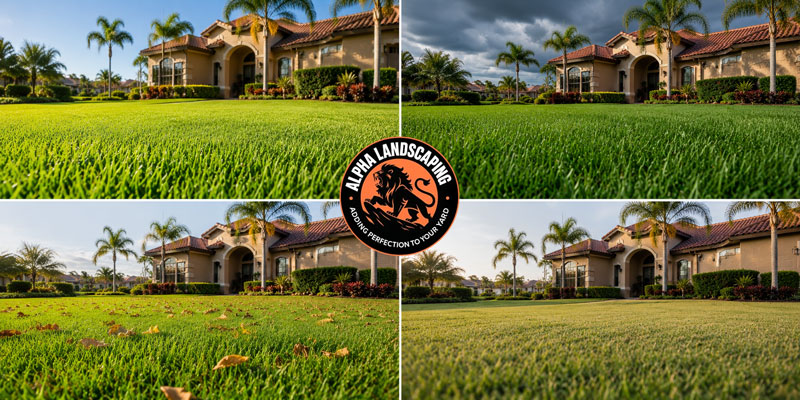
Here’s the part most folks get wrong. Up north, you mow hard from spring to fall and then you park the mower for winter. Florida doesn’t work that way. Our grass keeps growing almost year-round because we don’t get a real freeze that shuts it down. That means you keep mowing in December and January, just less often.
Here’s the schedule I run on Floratam and other standard St. Augustine lawns:
| Season | Months | Mowing Frequency | Why |
|---|---|---|---|
| Spring | March–May | Weekly | Growth wakes up fast as soil warms |
| Summer | June–September | Weekly (sometimes every 5 days) | Heat + daily rain = fastest growth of the year |
| Fall | October | Weekly, then slowing | Growth starts to ease as nights cool |
| Winter | November–February | Every 10–14 days | Grass slows but never fully stops here |
During a wet July, I’ve seen St. Augustine push out two or three inches of new growth in a single week. When that happens on an irrigated lawn, we’ll sometimes tighten the schedule to every five days so we never break the one-third rule (more on that below). On the flip side, a cool, dry stretch in January might let a lawn coast for two full weeks between cuts.
If you’ve got Bermuda, Zoysia, or Bahia instead, check our Central Florida mowing schedule by grass type for the right cadence on each one.
If keeping up with a weekly cut all summer sounds like a lot, you’re not wrong. That’s exactly why most of our clients hand it off. You can see what’s included in our residential lawn maintenance service and we’ll keep your yard on the right cadence year-round.
What’s the Correct Mowing Height for St. Augustine Grass?
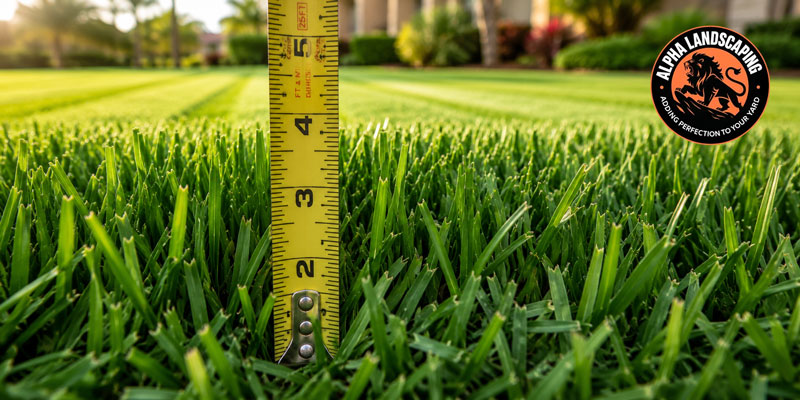
Frequency and height go hand in hand. You can’t talk about one without the other. For standard St. Augustine cultivars like Floratam, the target height is 3.5 to 4 inches. That’s not my opinion. That’s straight from the turf scientists.
According to the University of Florida IFAS Extension, standard St. Augustine cultivars mowed with a rotary mower should be kept at 3.5 to 4 inches, while dwarf cultivars like Seville stay lower at 2 to 2.5 inches. UF research even found that Floratam can hold up fine at 2.4 inches year-round, but for most homeowners, taller is safer.
Here’s why I push people to mow on the tall side:
- Taller grass shades out weeds. A thick 4-inch canopy blocks sunlight from reaching weed seeds before they sprout.
- It holds moisture. Taller blades shade the soil, so you lose less water to evaporation in our heat.
- It builds deeper roots. Deeper roots mean better drought tolerance and stronger resistance to pests and disease.
Quick reference for the common Florida grasses, based on UF/IFAS guidelines:
| Grass Type | Recommended Mowing Height |
|---|---|
| St. Augustine (standard, e.g. Floratam) | 3.5–4 inches |
| St. Augustine (dwarf, e.g. Seville) | 2–2.5 inches |
| Bahiagrass | 3–4 inches |
| Zoysiagrass | 1.5–2.5 inches |
| Bermudagrass | 0.75–1.5 inches |
The One-Third Rule (Don’t Skip This)
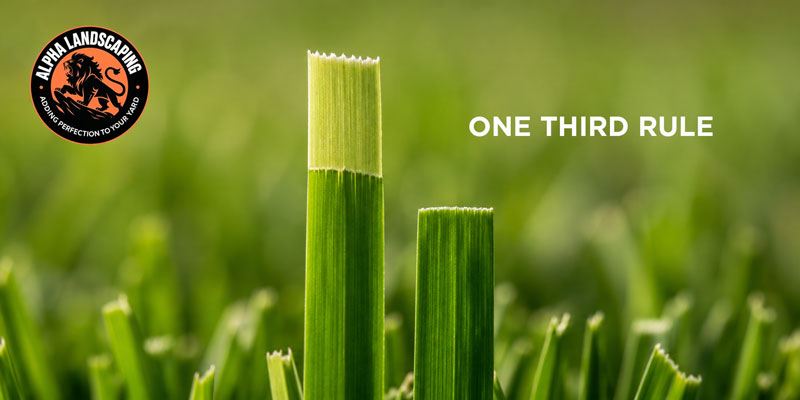
This is the single most important mowing rule, and it’s the reason your mowing frequency matters so much. Never remove more than one-third of the grass blade in a single mow.
So if your lawn is at the ideal 4 inches, you don’t want to let it grow past 6 inches before you cut it back to 4. Cutting off more than a third at once shocks the plant, weakens the roots, and opens the door to weeds and disease. The UF/IFAS folks call cutting too short “scalping,” and it’s one of the top causes of St. Augustine lawn failure.
Here’s how the one-third rule plays out in real life:
- Target height 4 inches? Mow before it hits 6 inches.
- Lawn got away from you and it’s at 7+ inches? Don’t scalp it back in one pass. Cut it in stages over a few days.
- Summer growth spurt? This is exactly why weekly mowing matters. Skip a week in July and you’ll be breaking the rule.
Keeping a lawn on schedule so it never crosses that line is half of what we do every week. For HOA and commercial properties where appearance standards are strict, this consistency is everything. If you manage a property like that, take a look at our commercial lawn maintenance service.
Do You Mow Grass in Winter in Florida?
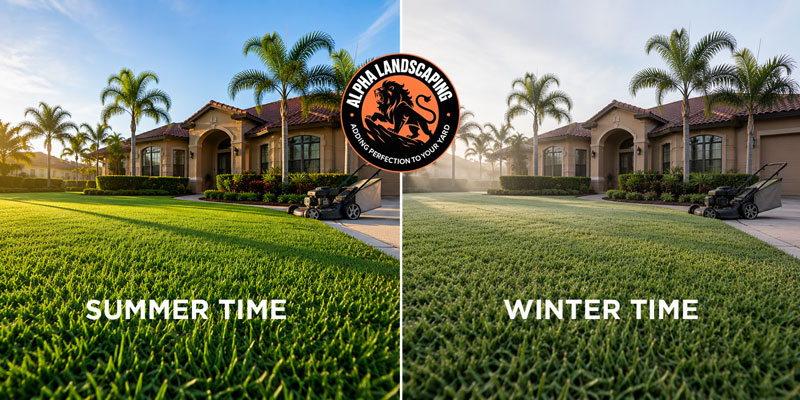
Short answer: yes. This trips up a lot of folks who move here from up north, so let me clear it up.
In most of the country, grass goes dormant and stops growing once temperatures drop, so mowing stops too. But Central Florida sits in a warm enough zone that St. Augustine keeps growing through the winter, just at a slower pace. We get the occasional cold snap that slows it way down, but we rarely get the kind of sustained freeze that fully shuts a lawn off.
So your winter mowing plan looks like this:
- Keep mowing, just less often. Every 10 to 14 days is usually enough from November through February.
- Don’t scalp it going into winter. Keep your height at the top of the range (4 inches). Taller grass protects the roots and crown during cold snaps.
- Watch the weather, not the calendar. A warm December week can spark a growth bump. A cold, dry January can slow it to a crawl. Mow based on what the grass is actually doing.
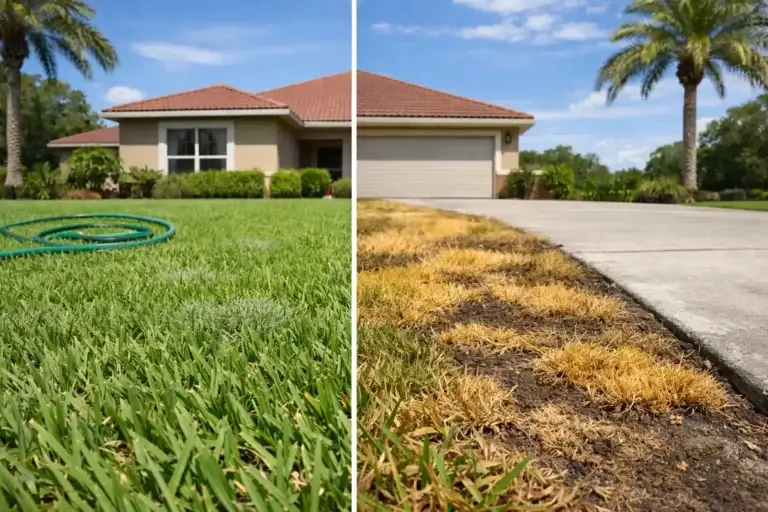
If you’ve been letting your mower sit in the garage all winter, that’s likely why your spring lawn looks rough. Skipping winter cuts entirely lets weeds move in and the lawn grow unevenly.
Common St. Augustine Mowing Mistakes I See All the Time
After years of taking over lawns from other companies and DIY homeowners, the same handful of mistakes show up over and over. Here’s what to avoid:
- Mowing too short. People think cutting low means mowing less often. It actually does the opposite. Short St. Augustine thins out, lets weeds in, and burns up in our sun.
- Dull mower blades. A dull blade tears the grass instead of slicing it, leaving brown, ragged tips that invite fungus. Sharpen your blade every couple of months during peak season.
- Bagging every clipping. Short St. Augustine clippings break down fast and feed nitrogen right back into the soil. Leave them unless the lawn is badly overgrown. They don’t cause thatch.
- Mowing the same direction every time. Going the same way every week creates ruts and trains the grass to lean. Switch up your pattern.
- Skipping winter mowing. Covered above, but it’s worth repeating. Florida grass doesn’t take the winter off, and neither should your mower.
Should You Mow It Yourself or Hire a Pro?
Plenty of folks mow their own St. Augustine and do a fine job. But here’s where a pro crew earns its keep:
- Consistency. We show up every week, rain or shine, so your lawn never crosses that one-third line.
- Sharp equipment. Commercial mowers with sharp blades cut cleaner and faster than a homeowner mower that gets sharpened once a year.
- Pest and disease scouting. Every visit, we’re looking for chinch bugs, fungus, and dry spots. Catching that early saves you a dead patch later.
- Your time back. Summer mowing in Florida heat is no joke. A lot of clients hire us just to get their weekends back.
We’ve been doing this since 2020 and we’re a family-owned operation, so you deal directly with me, not a call center. You can learn more about Alpha Landscaping LLC and how we got started.
Where We Mow St. Augustine Lawns
We keep lawns on the right mowing schedule all across Central Florida. Find your area below:
- Davenport lawn and yard maintenance
- Four Corners lawn care
- Clermont lawn care
- Kissimmee lawn care service
- Groveland lawn care
- Haines City lawn care
- Minneola lawn care
Frequently Asked Questions
How often should I mow St. Augustine grass in summer?
Mow weekly during the Florida summer (June through September). On irrigated lawns during the rainy season, you may need to mow every five days to keep up with fast growth and stay within the one-third rule.
What is the best height to cut St. Augustine grass?
Keep standard St. Augustine cultivars like Floratam at 3.5 to 4 inches. Dwarf cultivars such as Seville should be kept lower at 2 to 2.5 inches. Taller grass shades out weeds, holds moisture, and grows deeper roots.
Can you cut St. Augustine grass too short?
Yes, and it’s one of the most common ways people kill their lawn. Cutting below 2.5 inches, called scalping, exposes the soil, invites weeds, and weakens the root system. Stick to the recommended height and never remove more than one-third of the blade at once.
Do you mow grass in winter in Central Florida?
Yes. St. Augustine grass in Central Florida keeps growing through the winter, just slower. Mow every 10 to 14 days from November through February, and keep the height tall to protect the roots during cold snaps.
Should I bag my St. Augustine clippings?
Usually no. Short clippings decompose quickly and return nitrogen to the soil. Only bag them if the lawn is severely overgrown and you’re removing more than one-third of the blade. Clippings do not cause thatch.
The Bottom Line
Once you know how often to mow St. Augustine grass, the rest falls into place: weekly from March through October, every 10 to 14 days in winter, kept at 3.5 to 4 inches, and never cutting more than a third at a time. Get those right and you’ll have a thick, green, weed-resistant Florida lawn that holds up to the heat.
If you’d rather hand the whole thing off and never think about the mowing schedule again, that’s what we’re here for. Get a free quote and we’ll get your lawn on the right cadence.