Best Mowing Height for St. Augustine Grass in Central Florida (From the Field)
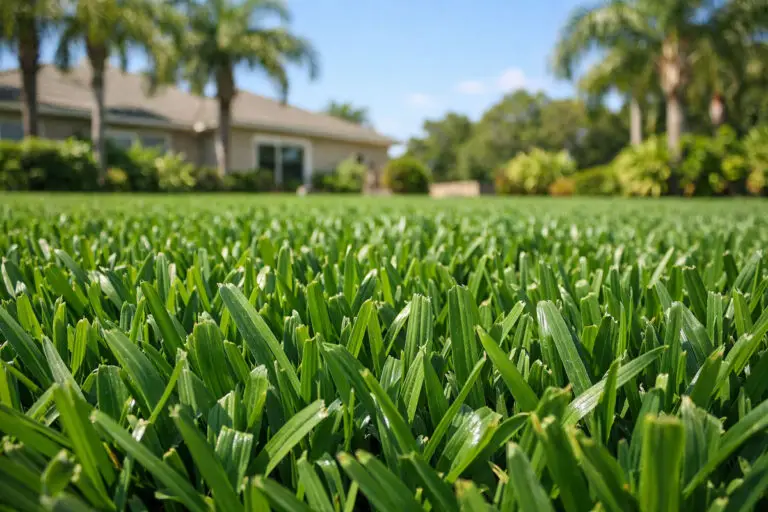
The best mowing height for St. Augustine grass in Central Florida is between 3.5 and 4 inches — and getting this right is one of the simplest things you can do to keep your lawn thick, green, and healthy all year long.
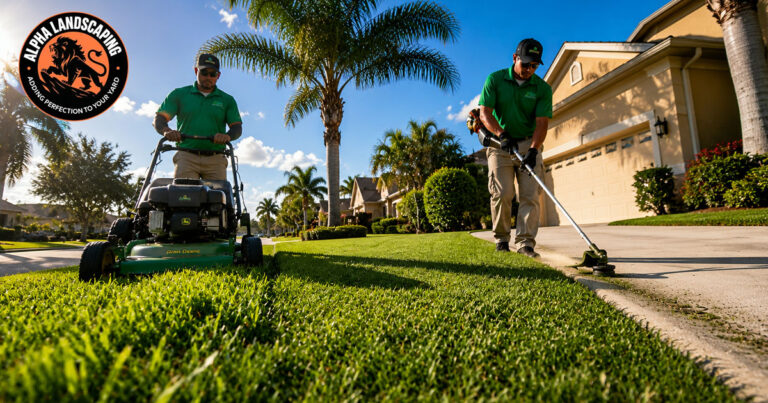
I’m Austin Halsey, founder of Alpha Landscaping LLC, and I’ve been mowing, maintaining, and repairing lawns across Polk and Osceola Counties since 2020. If there’s one mistake I see homeowners make more than any other, it’s cutting St. Augustine grass way too short. It happens all the time, and it causes real damage.
Let me walk you through what the science says, what I see on the job every week, and how you can get your mowing height dialed in right.
What Does the University of Florida Recommend?
I don’t just go off gut feeling when it comes to mowing heights. I follow the research.
The University of Florida’s Institute of Food and Agricultural Sciences (UF/IFAS) is clear about this: standard St. Augustine cultivars like Floratam, BitterBlue, and Classic should be mowed at 3.5 to 4 inches when using a rotary mower. They also point out that mowing below this range increases stress, discourages deep root growth, and raises the chance of scalping if you miss a week due to weather. (UF/IFAS — St. Augustinegrass for Florida Lawns)
The UF/IFAS Extension in Osceola County — that’s our backyard here at Alpha Landscaping — backs this up. Their turfgrass guidelines list the same 3.5 to 4 inch range and stress that you should never remove more than one third of the grass blade at any mowing. (UF/IFAS Extension Osceola County — Common Turfgrasses of Central Florida)
Quick note on dwarf varieties: If you have a dwarf St. Augustine like Seville or Captiva, UF/IFAS recommends a lower height of about 2 to 2.5 inches. But most yards in Davenport, Clermont, and the Four Corners area have Floratam — so 3.5 to 4 inches is your target.
Why Does Mowing Height Matter So Much?
Think of your grass blades like solar panels. They capture sunlight and turn it into food through photosynthesis. When you chop off too much of that blade, the plant can’t produce enough energy to feed its root system.
Here’s what actually happens when St. Augustine gets cut too low on a regular basis:
- Shallow roots. Turfgrass research shows that root depth is directly tied to mowing height. The lower you mow, the shorter the roots grow. Shorter roots mean less access to water and nutrients in the soil.
- More weeds. Short grass exposes the soil to sunlight, which is exactly what weed seeds need to germinate. A taller lawn naturally shades the ground and crowds out weeds before they get a foothold.
- Brown and yellow patches. St. Augustine spreads through stolons — those above ground runners that sit on the soil surface. Without enough leaf cover to shade them, stolons dry out in Florida heat and you end up with dead spots.
- Slower recovery from stress. Whether it’s a drought, a heavy rainstorm, or a week of 95 degree days, a lawn that’s been scalped just doesn’t bounce back the way a properly mowed lawn does.
I’ve seen this play out hundreds of times on properties across Davenport, Clermont, and Four Corners. A homeowner cuts their lawn at 2 or 2.5 inches for a few months, and by midsummer the lawn is thin, patchy, and full of weeds. Then they’re looking at a major recovery job that costs far more than regular lawn maintenance would have.
The One Third Rule: Don’t Skip This
There’s a well known guideline in turfgrass science called the one third rule: never remove more than one third of the grass blade height in a single mowing.
This rule goes back to a USDA study from the 1950s that found removing more than one third of the leaf caused root growth to temporarily stop. A follow up study at North Carolina State University in 1986 confirmed that moderate cuts didn’t cause serious harm, but extreme defoliation did real damage to the turf stand. (Iowa State University Extension — The Story of the 1/3 Rule)
What does this mean for you?
If you keep your St. Augustine at 4 inches, you should mow before it reaches about 6 inches. UF/IFAS gives this exact example in their Florida lawn mowing guide. (UF/IFAS EDIS — Mowing Your Florida Lawn)
In Central Florida’s growing season (roughly April through October), St. Augustine grows fast. That usually means weekly mowing to stay on top of it. If you let it go two or three weeks and then hack it down, you’re doing more harm than good.
Mowing Height by Season: What I Do on My Routes
Mowing height isn’t something you set once and forget. I adjust it based on what the grass needs at different times of the year.
Season | Recommended Height | Why |
Spring (March to May) | 3.5 inches | Grass is coming out of dormancy and growing fast |
Summer (June to September) | 4 inches | Max height protects roots from heat and retains moisture |
Fall (October to November) | 3.5 to 4 inches | Growth slows, keep height steady |
Winter (December to February) | 3.5 inches | Growth is minimal, reduce gradually |
During our wet, hot summers, I keep most lawns at 4 inches. That extra half inch makes a real difference when it comes to moisture retention and heat tolerance. If you want to know more about summer lawn care for St. Augustine, I wrote a full guide on it: St. Augustine Grass Summer Care Guide.
For the full picture on how mowing fits into your year-round routine — including grass types, fertilizing windows, pest timing, and seasonal care — see our Central Florida lawn maintenance guide.
DIY Mowers vs. Professional Equipment: What’s the Difference?
This is something I don’t think enough people talk about.
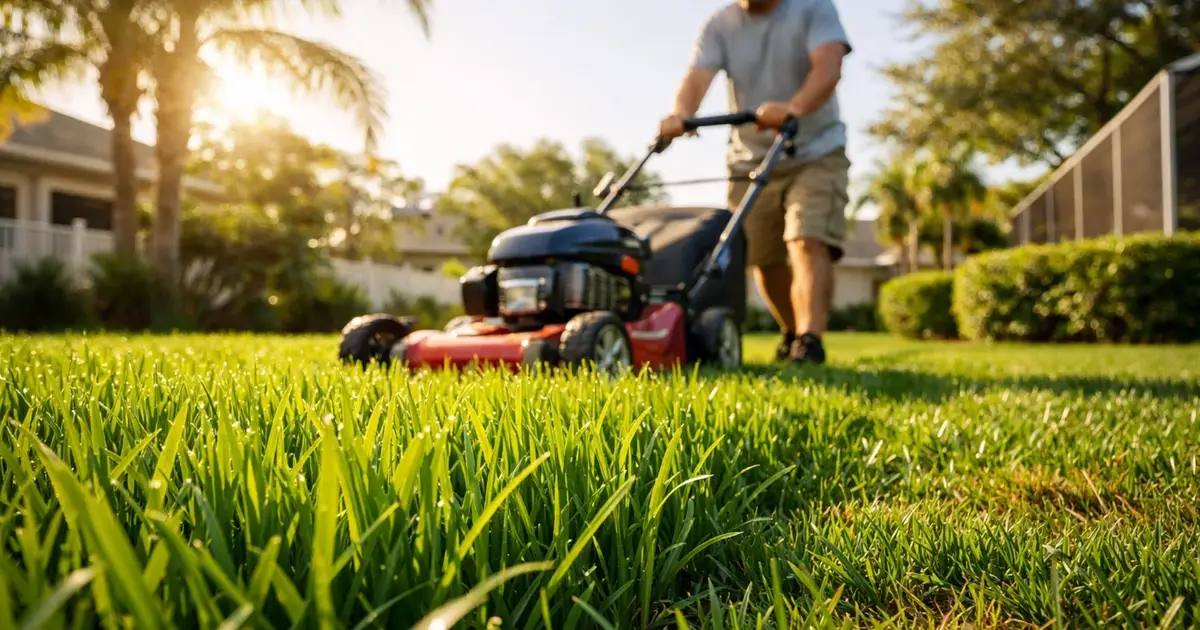
Most residential push mowers have a hard time holding a consistent height across uneven terrain. The deck rocks, the wheels dip into soft spots, and what was supposed to be a 4 inch cut ends up being 2.5 inches in some areas and 5 inches in others.
Residential push mowers:
- Height settings are often inaccurate and drift over time
- Blades dull quickly, tearing the grass instead of cutting it clean
- Struggle to maintain even height on bumpy or sloped yards
Commercial grade mowers (what we use):
- Precise, adjustable deck height
- Blades sharpened on a regular schedule
- Consistent cut across uneven terrain and slopes
A dull mower blade tears grass blades instead of slicing them. Torn grass turns white or brown at the tips, and those ragged edges become entry points for fungal diseases. That’s a problem you can avoid with sharp blades and the right equipment.
If you’re a DIY mower, one thing you can do right now is check your blade. If it’s been more than a month since you sharpened it (or if you’ve hit rocks or roots), it’s time. For a full breakdown of the DIY vs. professional question, check out this article: DIY Lawn Care vs. Hiring a Professional.
Common Mowing Mistakes I See in Central Florida
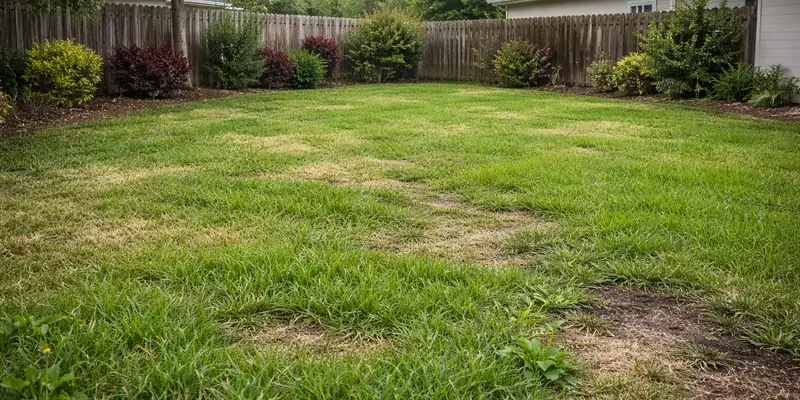
After five plus years of doing this work, I’ve seen just about every mowing mistake in the book. Here are the ones that come up the most:
Cutting too short to save time. Some homeowners cut at 2 inches so they don’t have to mow as often. This backfires fast. Short grass grows back stressed, gets invaded by weeds, and ends up needing more work, not less.
Skipping weeks then scalping. Missing a week or two and then chopping the lawn way down violates the one third rule and shocks the grass. If you fall behind, bring it down in stages over two or three mowings instead of one drastic cut.
Not adjusting for shade. Parts of your yard that get less sun need to be cut higher, not lower. Taller blades capture more light for photosynthesis, which is exactly what shaded grass needs. UF/IFAS specifically recommends increasing mowing height in shaded areas.
Mowing when the grass is wet. Wet St. Augustine clumps up under the mower deck and creates an uneven cut. It also makes your mower work harder and can spread fungal spores. Wait until the lawn dries out.
Ignoring the mower height setting. A lot of folks set their mower height once and never check it again. Those settings shift. Measure your actual cut height with a ruler on a flat surface every few weeks.
What About Other Lawn Problems?
Mowing height is a big deal, but it’s not the only thing that affects your St. Augustine lawn. If you’re seeing issues like brown patches, thinning, or yellow spots, the problem might be something else. I wrote a detailed guide covering the most common lawn issues in our area and how to fix them: Easy Fixes for Common Lawn Problems in Central Florida.
And soil nutrition plays a huge role too. If your lawn is thinning out even with proper mowing, you might need to look at what you’re feeding it. Check out my guide on when to fertilize St. Augustine grass — timing matters more than most people realize.
If you want to go deeper on feeding your lawn, here’s a breakdown of the best fertilizer for St. Augustine grass based on what actually works here in Central Florida.
And if your hedges or shrubs are getting out of hand, proper trimming timing matters just as much as mowing height. Here’s a good place to start: Best Time to Prune Evergreen Shrubs.
When Mowing Height Alone Won’t Fix Things
Sometimes a lawn gets so far gone that just adjusting the mower deck isn’t enough. If your St. Augustine has been scalped repeatedly through a full growing season, you might be looking at:
- Large bare patches that need sod replacement
- Heavy weed infestation that requires targeted treatment
- Compacted soil that needs aeration
In those cases, a seasonal yard cleanup or a full lawn restoration plan is usually the fastest path back to a healthy yard. We handle these kinds of projects regularly for homeowners and commercial properties across Polk and Osceola Counties.
If your trees are also contributing to shade or drainage problems, our tree trimming services can open things up and give your lawn the light it needs to thrive.
How Often Should You Mow St. Augustine Grass?
This is one of the most common questions I get. Here’s the straight answer: during the growing season (April through October), plan on mowing every 7 days. St. Augustine in Central Florida grows fast when temperatures are warm and rain is consistent.
In the cooler months (November through March), growth slows down significantly. You may only need to mow every 2 to 3 weeks during this period — or sometimes less.
The key is not to let your lawn get ahead of you. If it’s already at 6 inches and you’re trying to bring it back to 4 inches, you need to do it in stages — not one drastic cut that violates the one third rule.
FAQs About St. Augustine Grass Mowing Height
Can I cut St. Augustine grass shorter to mow less often?
No. Cutting shorter stresses the grass, weakens the roots, and opens the door for weeds. You’ll end up spending more time and money fixing the damage than you saved by skipping a mow.
What mower deck setting should I use?
For most residential rotary mowers, set the deck to the highest or second highest setting. Then measure the actual cut height with a ruler on a driveway or sidewalk to confirm it’s in the 3.5 to 4 inch range.
Should mowing height change during the year?
Yes. During the hottest months (June through September), bump your height up to 4 inches. You can lower it slightly in cooler months when the grass isn’t growing as fast.
Does professional lawn care adjust height by season?
Good ones do. At Alpha Landscaping, we adjust mowing height based on season, weather patterns, and the specific needs of each property.
What’s the quickest way to damage St. Augustine grass?
Scalping it during hot weather. Repeated low cuts in summer can damage your lawn badly enough that it takes months to recover — or may not recover at all without intervention.
Does leaving clippings on the lawn help or hurt?
It helps. Grass clippings break down quickly and return nutrients to the soil. UF/IFAS confirms that clippings do not contribute to thatch buildup when you mow at the right height and frequency.
Bottom Line
The best mowing height for St. Augustine grass in Central Florida is 3.5 to 4 inches, period. It’s backed by UF/IFAS research, it’s what every experienced lawn care professional in our area practices, and it’s what I see work on properties week after week across Davenport, Clermont, Four Corners, and the rest of Polk and Osceola Counties.
Getting this one thing right will save you money, reduce weed problems, and give you a thicker, greener lawn that actually holds up through Florida summers.
If you’re not sure whether your lawn is being cut at the right height — or if you’re tired of fighting it on your own — Alpha Landscaping LLC is here to help. We’re a family-owned business based in Davenport, FL, and we serve residential and commercial properties across the area.
Contact us today to schedule a free consultation, or get a quote online. The best mowing height for St. Augustine grass starts with hiring a team that knows exactly how to maintain it.