Tree Trimming Cost in Central Florida: What to Expect (2026)
By Austin Halsey, Owner of Alpha Landscaping LLC | Updated March 2026
Tree trimming in Central Florida typically costs between $150 and $800 for most residential trees, depending on the size, species, and accessibility. Palm trimming is one of the most common requests I get and runs $75 to $250 per palm. Small ornamental trees cost $150 to $400, medium trees like live oaks and laurel oaks run $300 to $800, and large mature trees can range from $500 to $1,500 or more. Full tree removal starts around $500 and can exceed $3,000 for large or hazardous trees near structures. I have been trimming and maintaining trees throughout the Davenport, Clermont, and Kissimmee areas for years, and this guide will help you understand exactly what drives those prices.
2026 Tree Trimming Prices for Central Florida
Here is a detailed breakdown of what homeowners across Central Florida can expect to pay for professional tree trimming and related services.
Tree Trimming by Size
| Tree Category | Height Range | Price Range | Common Examples |
|---|---|---|---|
| Palm trimming | 10 – 40+ ft | $75 – $250 per palm | Sabal palm, Queen palm, Washingtonia, Sylvester date palm |
| Small trees | Under 15 ft | $150 – $400 | Crape myrtle, dogwood, small magnolia, citrus trees |
| Medium trees | 15 – 35 ft | $300 – $800 | Laurel oak, sweetgum, young live oak, camphor tree |
| Large trees | 35 – 60+ ft | $500 – $1,500+ | Mature live oak, slash pine, mature magnolia, bald cypress |
Tree Removal Pricing
| Tree Size | Removal Cost | Notes |
|---|---|---|
| Small (under 15 ft) | $200 – $600 | Straightforward removal, minimal risk |
| Medium (15 – 35 ft) | $500 – $1,500 | May require sectional cutting |
| Large (35 – 60+ ft) | $1,000 – $3,000+ | Often requires crane or specialized rigging |
| Hazardous / storm-damaged | $800 – $4,000+ | Premium for risk, urgency, and complexity |
Additional Tree Services
| Service | Price Range | Details |
|---|---|---|
| Stump grinding | $100 – $400 per stump | Price depends on stump diameter and root spread |
| Stump removal (full extraction) | $200 – $600 per stump | Includes removing the root ball and filling the hole |
| Emergency storm trimming | $300 – $1,500+ | After-hours and storm-response rates apply |
| Crown thinning | $250 – $800 | Selective removal of interior branches to improve airflow |
| Crown raising (clearance) | $200 – $600 | Removing lower branches for sidewalk, driveway, or roof clearance |
| Deadwood removal | $150 – $500 | Removing dead or dying branches to reduce hazard |
| Debris hauling (per load) | $75 – $200 | Truck load of branches, fronds, and brush |
Need an exact price for your property? Request a free tree trimming estimate here.
Factors That Affect Tree Trimming Costs
When I quote a tree trimming job, I evaluate several factors on-site. Understanding these will help you make sense of the estimate you receive.
Tree Height and Canopy Spread
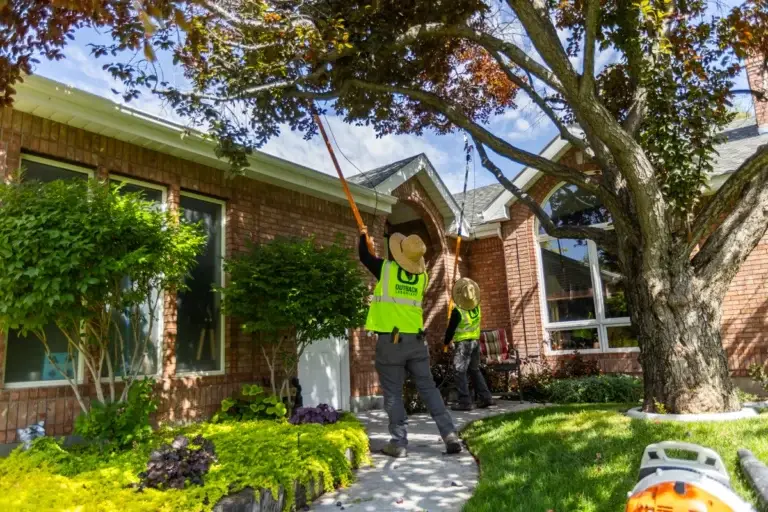
This is the primary cost driver. A 15-foot crape myrtle can be trimmed quickly with a pole saw from the ground. A 50-foot live oak with a 60-foot canopy spread requires climbing equipment, aerial lifts, or bucket trucks, and significantly more time and labor. The taller the tree and the wider the canopy, the higher the cost.
Tree Species
Different species have different wood densities, branch structures, and growth habits. Oaks and other hardwoods have heavy, dense wood that is harder to cut and heavier to lower safely. Pines are tall but relatively straightforward. Palms require specialized cutting techniques, especially tall palms like Washingtonias that can reach 50 feet or more. Date palms have sharp spines at the base of each frond that make them more labor-intensive and hazardous to trim.
Accessibility
A tree in the middle of an open yard is much easier and cheaper to trim than one wedged between your house, your fence, and your neighbor’s pool cage. Limited access means we cannot use large equipment, branches must be carefully lowered with ropes rather than dropped freely, and the job takes longer. Expect to pay more for trees near structures, power lines, or in tight spaces.
Number of Trees
If you need multiple trees trimmed in one visit, I offer per-tree discounts because my crew is already on-site with equipment staged. Trimming five palms at once is significantly cheaper per palm than calling me out for one at a time. If you have several trees that need attention, it makes financial sense to bundle them into one service visit.
Proximity to Structures and Power Lines
Trees that overhang roofs, pool cages, fences, or are near power lines require extra care. Branches must be cut in smaller sections and carefully lowered to avoid damage. If a tree is in contact with or very close to power lines, your utility company (Duke Energy or SECO Energy in the Davenport area) may handle trimming in the utility easement at no cost to you. For branches on your side of the meter, that responsibility falls on you as the homeowner. Proper pruning near structures follows the ANSI A300 pruning standards, which specify how cuts should be made to protect both the tree and the property.
Cleanup and Debris Removal
Every estimate from Alpha Landscaping includes full cleanup and debris removal from your property. Some companies quote a lower trimming price and then add hauling fees on top. I prefer to give you one all-inclusive number so there are no surprises. Debris volume matters, though. Trimming a large live oak can generate multiple truckloads of branches, which affects the overall cost.
Types of Tree Trimming Services We Provide
Palm Trimming
Palm trimming is the most frequent tree service I perform in the Davenport and Kissimmee area. Sabal palms, Queen palms, and Washingtonia palms all produce fronds that eventually brown, die, and hang from the crown. Beyond being unsightly, dead fronds are a liability during hurricane season because wind can tear them loose and send them into your roof, pool cage, or yard.
I recommend trimming palms once or twice per year. The International Society of Arboriculture (ISA) guidelines advise against over-pruning palms. A common mistake, sometimes called “hurricane cutting,” involves removing all fronds except the very top cluster. This actually weakens the palm and makes it more vulnerable to storm damage, not less. We follow ISA best practices and only remove fronds that are completely dead or hanging below horizontal.
Hardwood Tree Trimming
Live oaks, laurel oaks, and other hardwoods are the backbone of Central Florida’s tree canopy. Proper trimming maintains their health, improves light penetration to your lawn, reduces storm damage risk, and keeps branches clear of your roof and structures. We perform crown thinning, crown raising, deadwood removal, and structural pruning in accordance with ANSI A300 standards, which represent the accepted industry standard for tree care operations in the United States.
Hardwood trimming is best done during the dormant season or during mild weather, which in Central Florida means late fall through early spring. I will discuss the best timing for your specific trees when I provide your estimate.
Emergency Storm Trimming
Central Florida’s hurricane season runs June through November, and strong thunderstorms can strike any time from May through October. When a storm drops branches on your roof, blocks your driveway, or leaves a tree leaning dangerously, you need fast, reliable response.
Alpha Landscaping provides emergency storm trimming and debris removal for our service area. Emergency work is priced higher than scheduled trimming because of the urgency, after-hours response, and often hazardous conditions involved. If a tree is down on your home or a structure, your homeowner’s insurance may cover the removal cost. I recommend documenting the damage with photos and contacting your insurer before having the work done if it is safe to wait.
Stump Grinding and Removal
After a tree is removed, you are left with a stump. Stumps are tripping hazards, attract termites, and make mowing difficult. Stump grinding uses a machine to chip the stump down to 6 to 12 inches below grade. The resulting mulch fills the hole, and you can plant grass or install landscape over the area. Full stump removal extracts the entire root ball, which is more disruptive but necessary if you plan to build, pour concrete, or plant a new tree in the same spot.
When to Trim Trees in Central Florida
Timing matters for both the health of your trees and your wallet. Here is a seasonal guide specific to our climate:
| Season | Best For | Notes |
|---|---|---|
| Late fall – early spring (Nov – Mar) | Hardwood pruning, structural trimming, crown thinning | Trees are dormant or semi-dormant; less stress, better visibility of branch structure |
| Spring (Mar – May) | Pre-hurricane season palm trimming, deadwood removal | Get palms cleaned up before storm season arrives |
| Summer (Jun – Sep) | Light trimming, clearance cuts, emergency storm response | Avoid heavy pruning; trees are actively growing and stressed by heat |
| Fall (Oct – Nov) | Post-hurricane cleanup, second palm trimming | Good time to assess and address any storm damage |
The ISA recommends avoiding heavy pruning during the hottest months because trees are under physiological stress from heat and active growth. Pruning during dormancy also reduces the risk of disease transmission, particularly for oaks susceptible to oak wilt. For a detailed assessment of your trees and the best time to schedule their care, check out our guide on the best time to trim trees in Davenport, FL.
Signs You Need Professional Tree Trimming
Many homeowners are not sure when their trees need attention. Here are the most common signs that it is time to call a professional:
- Dead or hanging branches. Dead branches (identifiable by lack of leaves, peeling bark, or brittle wood) can fall without warning and cause injury or property damage.
- Branches touching or overhanging your roof. Branches in contact with your roof trap moisture, damage shingles, and provide a highway for pests. They also become projectiles in storms.
- Obstructed walkways or driveways. Low-hanging branches that force you to duck or that scrape your car need crown raising.
- Dense, overgrown canopy. A canopy so thick that no light reaches the ground underneath often means the tree would benefit from crown thinning, which also reduces wind resistance during storms.
- Crossing or rubbing branches. Branches that cross and rub against each other create wounds that invite disease and decay.
- Brown, hanging palm fronds. Dead fronds on palms are unsightly and can blow loose in wind. In communities with HOAs, hanging dead fronds often trigger violation notices.
- Visible decay, fungus, or cavities. Mushrooms growing on the trunk or base, large cavities, or soft, spongy wood are signs of internal decay.
- Recent storm damage. Split branches, torn bark, or a leaning trunk after a storm indicate structural damage that a professional should evaluate immediately.
If you notice any of these signs, do not wait. Tree problems tend to get worse and more expensive over time. A branch that could be trimmed for $200 today could fall on your pool cage next month and cost you thousands in repairs.
Why Choose Alpha Landscaping for Tree Trimming
When you hire Alpha Landscaping for tree trimming and pruning, you get a crew that follows industry best practices, not someone with a chainsaw and a pickup truck. Here is what sets us apart:
- Proper pruning techniques. We follow ANSI A300 standards and ISA guidelines for every cut. That means proper branch collar cuts, no topping, no lion-tailing, and no unnecessary removal of healthy wood.
- Full cleanup included. Every quote includes complete debris removal. We leave your property cleaner than we found it.
- Honest assessments. If a tree does not need trimming, I will tell you. I would rather earn your trust and your long-term business than sell you a service you do not need.
- Licensed and insured. Tree work involves real risk. You want a company that carries proper liability and workers’ compensation insurance. We do.
- Local knowledge. I know the tree species, soil conditions, and storm patterns specific to Davenport, Clermont, Kissimmee, and the surrounding communities.
Get Your Free Tree Trimming Estimate
Every tree is different, and the only way to get an accurate price is for me to see your trees in person. I provide free on-site estimates throughout Central Florida, including Davenport, Clermont, Kissimmee, Four Corners, Groveland, and Haines City.
During the estimate, I will assess each tree, explain exactly what work is needed and why, and give you a clear, written quote before any work begins.
Request Your Free Tree Trimming Estimate Online
Or call me directly at (352) 702-6361.
Frequently Asked Questions About Tree Trimming Costs in Central Florida
How often should I have my trees trimmed in Central Florida?
Most hardwood trees benefit from professional trimming every 2 to 3 years. Palms should be trimmed once or twice per year, typically in spring before hurricane season and again in fall if needed. Fast-growing species or trees near structures may need annual attention.
Is it cheaper to trim trees in winter?
Scheduling during the slower season (late fall through early spring) can sometimes result in slightly lower prices because demand is lower and scheduling is more flexible. More importantly, winter and early spring are the best times for hardwood pruning from a tree health perspective.
Do I need a permit to trim or remove trees in Davenport, FL?
Polk County does not typically require permits for routine tree trimming on residential property. However, tree removal, especially for large trees or trees in certain zoning districts, may require a permit. Some HOAs also have their own tree removal policies. I always advise clients to check with their HOA and local code enforcement before removing any significant tree.
Will my homeowner’s insurance cover tree removal after a storm?
In many cases, yes. If a tree falls on your home, garage, fence, or other insured structure, your homeowner’s insurance typically covers the removal cost (minus your deductible). If a tree falls in your yard but does not hit any structure, most policies will not cover removal. I recommend reviewing your policy before hurricane season so you know what is and is not covered.
What is the difference between tree trimming and tree pruning?
The terms are often used interchangeably, but technically, trimming refers to cutting back overgrowth for aesthetic or clearance purposes, while pruning is a more targeted practice focused on tree health and structure. Pruning involves removing specific branches for reasons like eliminating disease, improving airflow, or correcting structural problems. At Alpha Landscaping, every job includes an element of both.
Can I trim my own trees to save money?
You can safely handle small, low-hanging branches on trees you can reach from the ground with hand pruners or a pole saw. However, any work that requires climbing, a ladder (especially near power lines), or a chainsaw should be left to professionals. Tree work is consistently ranked among the most dangerous occupations in the country. For anything above your head or thicker than your arm, call a pro.
Do you offer discounts for trimming multiple trees at once?
Yes. When I am already on-site with my crew and equipment, the per-tree cost decreases because we are not mobilizing separately for each tree. If you have multiple palms, a few oaks, and some ornamental trees that all need attention, bundling them into one service visit is the most cost-effective approach. Contact me for a multi-tree estimate and I will give you the best pricing I can.