Tree Trimming vs Tree Pruning: What’s the Difference?
When homeowners in Davenport ask me about “tree trimming vs tree pruning,” they usually think these are two words for the same thing. They’re not — and knowing the difference can save your trees.
I hear both terms every week. Someone calls and says, “Austin, I need my trees trimmed.” But what they actually need — once I get out there and look — is pruning. Or sometimes it’s the other way around.
The confusion is understandable. A lot of companies use these words interchangeably. But they describe two different jobs with two different goals.
Let me break it down the way I’d explain it on the job.
What Is Tree Trimming?
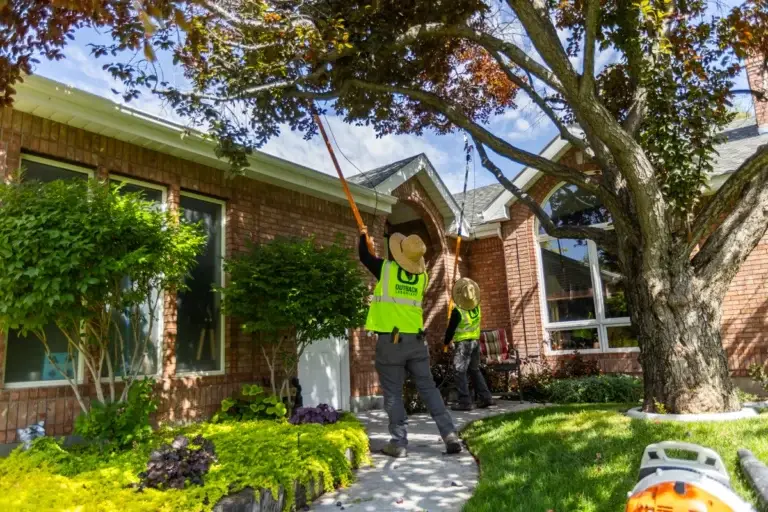
Tree trimming is about appearance and control. It’s the work you do to keep a tree looking neat, shaped, and sized right for the space it’s in.
When you call us for trimming, here’s what we’re focused on:
- Removing overgrown branches that have gotten out of shape
- Clearing limbs away from your roof, fence, or driveway
- Thinning the canopy so light and air can pass through
- Keeping the tree sized right for your yard
- Making your property look maintained and clean
Tree trimming is a landscaping practice focused on maintaining the shape, size, and appearance of trees and shrubs — it’s typically performed to enhance visual appeal and control overgrowth that can block sunlight or crowd other plants. Blooms Landcare Think of trimming like a haircut. You’re not diagnosing a problem. You’re just keeping things tidy and in bounds.
Most residential yard trees need trimming once or twice a year depending on how fast they grow and how close they are to structures. Our residential lawn maintenance service often includes routine trimming as part of keeping your property looking sharp year-round.
What Is Tree Pruning?
Pruning is about tree health and structure. It’s a more intentional, strategic type of cut — and it requires knowing what you’re looking at before you cut.
When we prune a tree, we’re asking:
- Is this branch dead, diseased, or damaged?
- Is this limb structurally weak — does it have included bark, a crack, or a bad union?
- Is the canopy overcrowded in a way that’s creating disease pressure or blocking airflow?
- Are there water sprouts or suckers pulling energy away from healthy growth?
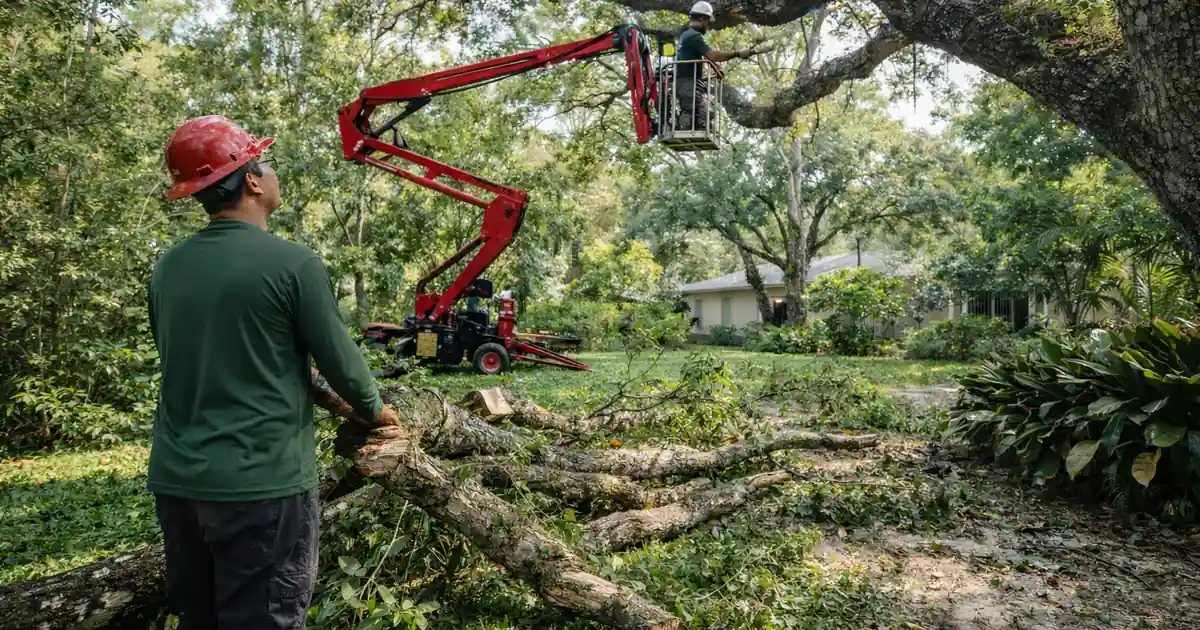
Tree pruning involves selectively removing dead, diseased, or structurally unsound branches to improve overall tree health and longevity. Unlike trimming, which is mostly cosmetic, pruning is a vital part of a tree’s health maintenance. Blooms Landcare Pruning is what keeps a tree strong for the long run. A well-pruned tree is less likely to fail in a storm, less likely to spread disease through the canopy, and more likely to live a full healthy life on your property.
Side-by-Side: Trimming vs Pruning
| Tree Trimming | Tree Pruning | |
|---|---|---|
| Goal | Appearance and control | Health and structure |
| What’s removed | Overgrown, out-of-shape growth | Dead, diseased, or weak branches |
| Timing | 1–2x per year, seasonal | As needed based on tree condition |
| Complexity | Moderate | Higher — requires reading the tree |
| Tools used | Shears, hedge trimmers, saws | Loppers, pruning saws, pole pruners |
| Who should do it | Trained crew | Experienced crew familiar with tree structure |
| Main risk if done wrong | Poor shape, weak regrowth | Damage to tree health or structure |
What Happens When You Get It Wrong
This is where I see a lot of damage on properties across Polk and Osceola Counties.
Over-trimming — cutting too much off just to make it look smaller — can starve a tree. Every leaf is a solar panel feeding the root system. Strip too many and the tree goes into stress mode.
Aggressive trimming such as tree topping can shock a tree into a state of starvation, forcing it to deplete its energy reserves just to survive. When a tree is over-trimmed, it often responds by producing water sprouts — rapidly growing, flimsy shoots. TreeWiseMen Those water sprouts are a tell. If you see them shooting straight up all over a tree — skinny, fast, vertical growth — someone over-trimmed it.
Improper pruning — cutting in the wrong spot, at the wrong time, or taking too much — can open the tree up to pests and fungal disease. This is especially true in Florida’s humid climate where fresh cuts that aren’t sealed fast enough become entry points.
According to the International Society of Arboriculture, it is best to remove no more than 25% of the visible canopy Texas Tree Surgeonsin a single season. That guideline exists for a reason.
Do You Need Trimming, Pruning, or Both?
Here’s a simple way to think about it:
You probably need trimming if:
- Branches are scraping against your roof or fence
- The tree is starting to look overgrown and shapeless
- Limbs are hanging over the driveway or walkway
- You want better light in the yard without removing the tree
You probably need pruning if:
- You can see dead or brown branches inside the canopy
- A limb looks like it’s dying back from the tip
- There are cracks or splits where a limb meets the trunk
- Mushrooms or fungal growth are showing up at the base
- The canopy is so dense it’s trapping moisture and heat
You likely need both if:
- The tree hasn’t been maintained in 2+ years
- You’re prepping for hurricane season and want a full canopy check
- The tree had storm damage that needs structural repair plus a cleanup cut
Not sure which one your trees need? Contact us and we’ll come take a look. I’ll tell you straight what it needs and what it doesn’t.
How This Applies to Common Trees in Davenport, FL
Different tree types respond differently, and this matters when you’re deciding what service to book.
Live Oaks — These are structural pruning trees. You want to maintain strong branch unions, remove deadwood, and thin the canopy for wind resistance. Trimming for shape is secondary.
Crepe Myrtles — These need light trimming to shape, not heavy cuts. Pruning to remove old flower heads and crossing branches keeps them healthy. Never top them — that’s the most common mistake I see in Central Florida.
Palms — Palms need trimming only. Remove dead, brown, or hanging fronds. They don’t have a branch structure to prune the way hardwoods do.
Hedges and shrubs — These lean toward trimming to maintain shape and size. If you’re dealing with diseased or pest-damaged shrubs, that crosses into pruning territory. Our bush trimming and hedge maintenance service covers both.
When Should Each One Happen in Davenport?
I covered this in detail in my full guide on the best time to trim trees in Davenport, FL, but here’s the quick version:
- Trimming: flexible — follow the growth cycle of the specific tree, typically 1–2x per year
- Pruning for structure: January through March is the sweet spot
- Storm prep pruning: March through May before hurricane season
- Deadwood removal: any time you see it — don’t wait
FAQs: Tree Trimming vs Tree Pruning
Is tree trimming the same as tree pruning? No. Trimming focuses on appearance and size control. Pruning focuses on tree health, removing dead, diseased, or structurally weak branches. They’re related, but the goals and techniques are different.
Which costs more — trimming or pruning? Pricing is usually similar per job because both require the same equipment and crew time. What varies is complexity. A structural pruning job on a large oak takes more assessment time than a shape trim on a small crepe myrtle. We’ll give you a straight quote before we touch anything. Request a free quote here.
Can I trim my own trees in Davenport, FL? Light trimming on small shrubs and low branches is manageable for most homeowners. Anything involving height, large limbs, or a tree close to the house — call a pro. The liability alone is not worth it.
How do I know if a tree needs pruning or removal? That’s a bigger question with a full answer. I wrote a whole post on signs a tree needs removal vs trimming if you want to read through the warning signs.
Does Alpha Landscaping LLC offer both trimming and pruning? Yes. Our tree trimming services cover both. We assess each tree before we cut anything, so you get the right service for what the tree actually needs.
The Bottom Line
Tree trimming keeps your yard looking good. Tree pruning keeps your trees alive and structurally safe.
Most healthy trees need both — just at different times and for different reasons.
If you’re in Davenport, Clermont, Kissimmee, or the Four Corners area and you’re not sure what your trees need — get a free on-site quote and I’ll tell you exactly what we see.