Signs a Tree Needs to Be Removed vs Trimmed
One of the most common calls I get in Davenport is a homeowner who waited too long. They knew something looked off with their tree for months — and then a storm made the decision for them.
Learning the signs a tree needs to be removed before that happens is the difference between a scheduled job and an emergency call.
But here’s what I also want to say up front: most trees don’t need to come down. I’ve seen homeowners ready to remove a tree that just needed a good structural prune and some deadwood cleared out. On the flip side, I’ve seen trees that looked fine from the street but had root rot and hollow trunks, making them ticking clocks.
This post helps you figure out which situation you’re dealing with.
Start Here: Can the Tree Be Saved?
Before you think about removal, ask this question first.
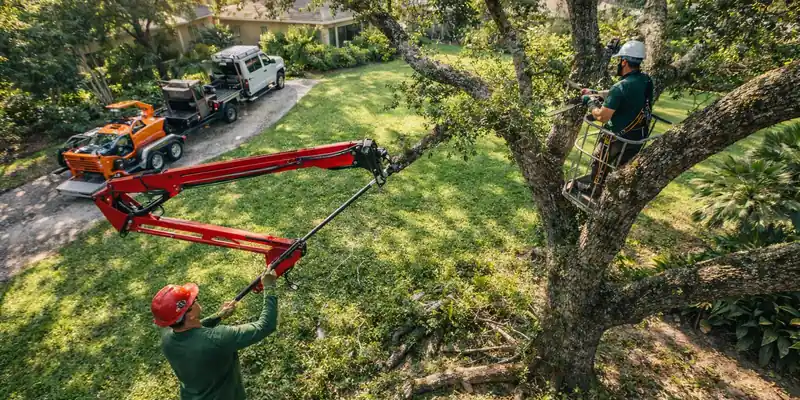
A tree that’s struggling isn’t always a tree that needs to come down. Sometimes, the right pruning, deadwood removal, and canopy work can bring it back to a safe, healthy state.
Signs the tree can likely be saved with trimming or pruning:
- Dead branches are isolated to one or two limbs, not spread through the whole canopy
- The trunk is solid with no hollow areas or major cracks
- The root zone looks stable — no heaving, lifting, or mushroom growth
- The tree has good leaf coverage in the growing season
- The lean is minor and has been the same for years
If most of the tree is healthy and the problems are isolated, our tree trimming services can often address the issue without removing the tree.
Signs a Tree Needs to Be Removed
These are the warning signs I look for on every property walk. None of these are automatic death sentences for the tree — but each one deserves a professional look before the next storm rolls through.
1. The Tree Is Dead or Mostly Dead
This one seems obvious but is surprisingly easy to miss, especially in winter when some trees look bare anyway.
Here’s how to tell if a branch is actually dead:
- Snap a small twig — live branches will bend before they break, whereas dead branches will snap easily. Live branches will have green in the inner layers, while dead branches will be dry and brown or gray.
- No leaves or buds during the growing season
- Bark is peeling or falling off in large sections
If the whole tree is dead — leaves gone in summer, bark sloughing off, no green under the bark anywhere — removal is the only option. A dead tree has no structural integrity and becomes increasingly dangerous with every passing month.
2. More Than 50% of the Canopy Is Gone or Dying
Storm damage, disease, or pest pressure can strip a canopy fast. When more than half the crown is gone or dead, most trees can’t come back.
If more than half of the canopy is lost, most trees won’t survive, making removal the safest option.
You might be looking at a tree that still has green on some branches but has clearly given up on a large section of the crown. That’s a tree trending toward removal, not recovery.
3. The Trunk Has Cracks, Cavities, or Missing Bark
The trunk is the tree’s spine. When it’s compromised, the whole tree is compromised.
Look for:
- Large vertical cracks running along the trunk
- Hollow areas or soft spots you can press into
- Missing bark with exposed wood underneath
- Deep wounds that haven’t healed over
- Fungal conks or shelf mushrooms growing directly on the trunk (these indicate internal decay)
Looking at the trunk, you want to check for hollows, rotten areas, peeling bark, and splits and cracks. Any one of these warrants a closer look. Multiple together is a serious red flag.
4. The Tree Has Developed a Sudden or Severe Lean
Some trees naturally grow at a slight angle — that’s fine and normal. What’s not fine is a lean that appeared suddenly, or one that keeps getting more pronounced.
A sudden lean often means:
- Root failure on one side
- Soil saturation and ground instability (common in Florida after heavy rain)
- Structural failure beginning inside the trunk
When it’s a dramatic lean that compromises the tree’s architecture or the tree suddenly has a lean it never had previously, you can start to wonder about the health of your tree.
If a tree is leaning toward your house, your car, your neighbor’s property, or a play area — don’t wait. Get a professional assessment immediately.
5. Mushrooms or Fungal Growth at the Base
This is one of the most overlooked warning signs I see in yards across Davenport and the Four Corners area.
An abundance of mushrooms at the root plate could be a sign that roots are rotting and dying.
Fungi feed on decaying wood. When they show up at the base of a living tree, it tells you there’s dead or dying wood underground — in the roots — that you can’t see. Root rot weakens the anchor system and can cause a tree to fall without much warning.
6. Major Root Damage or Lifting
Roots lifting out of the ground — not roots growing along the surface, but the whole root plate tilting — is a sign the tree may already be starting to go over.
Also watch for:
- Recent trenching, excavation, or construction within the drip line of the tree
- Paving or concrete poured over the root zone
- Roots that were cut or damaged by utility work
These all compromise the root system and can destabilize a tree that looks perfectly healthy above ground.
7. The Tree Is Threatening a Structure, Power Line, or Person
Sometimes the tree itself is fine — it’s just in the wrong spot.
A tree that’s growing into power lines needs to come out or be significantly reduced — and work near utility lines should never be a DIY job.
A tree that’s within falling distance of your house, garage, pool, or play area needs to be assessed for risk even if it appears healthy. Generally, a tree should be planted at least 15 feet away from the foundation of your home. For larger species, that distance should be increased to at least 20 feet. If yours is closer and showing any other warning signs, that’s a conversation worth having.
The Warning Signs That Usually Mean Trimming — Not Removal
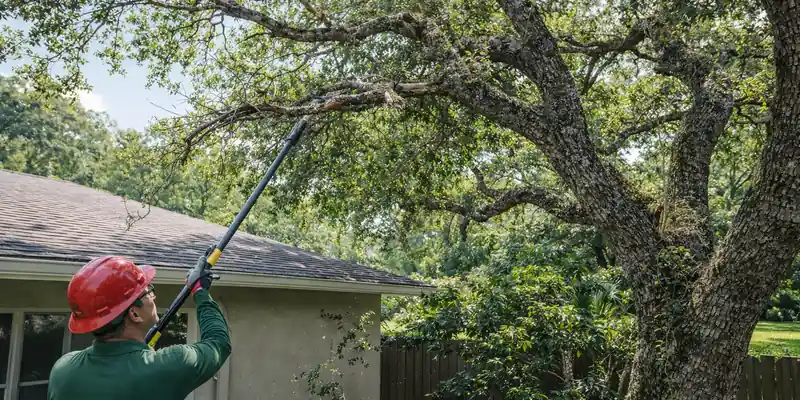
Not every concerning tree sign means the whole tree has to go. Here’s what usually points to trimming or pruning as the right call:
- Branches hanging over the roof but the trunk and structure are solid
- Deadwood isolated to a few limbs while the rest of the tree is green and healthy
- An overgrown canopy that’s blocking light or dragging on the fence
- Crossing branches rubbing against each other and creating wounds
- Suckers and water sprouts pulling energy away from the main structure
- Light storm damage — a broken limb that didn’t compromise the trunk
In these cases, a good prune and trim is all you need. Check out my post on tree trimming vs tree pruning if you want to know which type of service actually applies to your situation. And if you’re wondering about timing, see my guide on the best time to schedule tree trimming in Davenport before you book.
If your trees are healthy but your shrubs and hedges need attention too, our bush trimming and hedge maintenance service handles that separately. For shrub-specific timing in Central Florida, my post on pruning shrubs and ornamental trees in Central Florida covers what you need to know.
Florida-Specific Risks to Watch For
Living in Polk and Osceola Counties means you’re dealing with conditions that make tree failure more likely than in most of the country:
Hurricane season (June 1 – November 30) — Every weak tree on your property is a liability from June through November. The time to address risks is March through May, not after the first named storm.
Sandy soil and wet conditions — Florida’s sandy soil drains fast but also gives way faster when saturated. A tree that looks stable in dry season can lean or uproot after three days of heavy rain.
High humidity and fungal pressure — Decay happens faster here. A wound that might take years to become serious in a dry climate can rot out in a single wet season in Central Florida.
Lightning — Florida leads the country in lightning strikes. A lightning-struck tree may look fine on the outside but have internal damage that makes it structurally compromised. Always have a struck tree assessed before assuming it’s okay.
What to Do If You’re Not Sure
If you’re standing in your yard looking at a tree and something just feels off — trust that instinct.
The cost of getting it assessed is nothing compared to the cost of a tree coming down on your roof or your neighbor’s fence. Our yard maintenance services in Davenport include tree assessments, and I’ll give you a straight answer on what I see.
If you’re thinking about cleanup before or after any tree work, our mulching and seasonal yard cleanup service can handle the aftermath. And if you’re managing a rental or commercial property, our residential lawn maintenance service keeps the full yard in shape year-round.
FAQs: Signs a Tree Needs to Be Removed
How do I know if a tree is dead or just dormant? Snap a small twig. A live twig bends. A dead twig snaps clean and the inside is dry and gray. Scratch the bark with your thumbnail — live wood underneath will be green or white. Dead wood is dry and brown.
Can a leaning tree be saved? It depends on why it’s leaning. A gradual lean that’s always been there is different from a sudden lean after a storm or heavy rain. A sudden lean with root heaving is usually a removal situation.
What happens if I ignore a dying tree? It keeps decaying. The root system weakens. The structural integrity drops. And eventually, a wind event, a wet weekend, or just gravity finishes it. At that point you’re looking at emergency removal costs instead of a planned job — and possible property damage on top of that.
Is tree removal covered by homeowners’ insurance in Florida? It depends on your policy and what caused the damage. Trees that fall due to storm damage and hit a structure are often covered. Trees that fall due to neglect usually aren’t. Check your policy before you need it.
How much does tree removal cost in Davenport, FL? That varies a lot by size, location, and the job’s complexity. I cover that in detail in my post on how much tree trimming costs in Davenport, FL. For removal specifically, the range in Florida runs from a few hundred dollars for a small tree to well over a thousand for a large one in a tight spot.
Can I remove a tree myself in Davenport, FL? Small, straightforward trees away from structures can sometimes be a DIY job if you’re experienced with a chainsaw and the proper safety gear. Anything close to a structure, power line, or over 20 feet — call a pro. The risk is not worth it.
Don’t Let a Storm Make the Decision for You
The signs a tree needs to be removed are usually visible well before anything goes wrong. A lean that wasn’t there last year. Bark falling off. Mushrooms at the base. A canopy that’s going bare on one side.
If you’re seeing any of these on your property in Davenport, Clermont, Kissimmee, or anywhere in Polk or Osceola County — get a free quote and let us take a look before the next storm season does it for you.