Best Fertilizer for St Augustine Grass in Central Florida: What Actually Works
Finding the best fertilizer for St Augustine grass in Central Florida can feel overwhelming when you’re standing in the fertilizer aisle at Lowes or Home Depot staring at dozens of bags with different numbers and claims.
Quick Answer
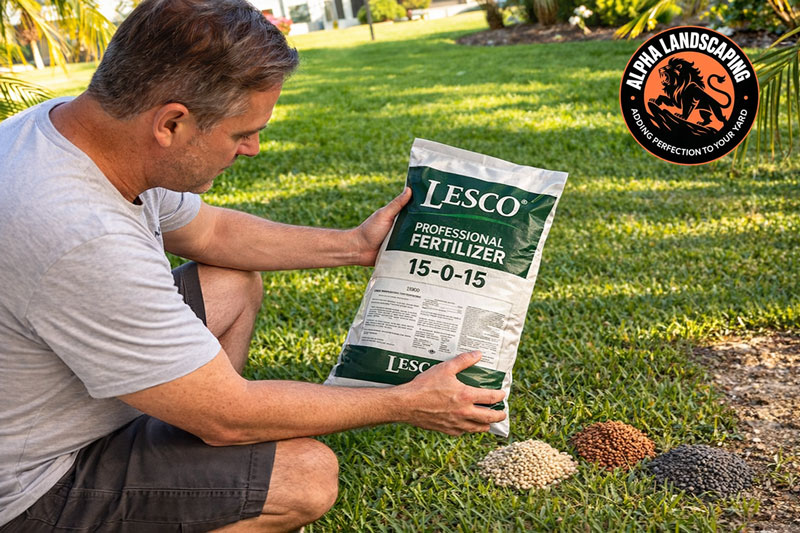
The best fertilizer for St. Augustine grass in Central Florida is Lesco 15-0-15 — slow-release, 3% iron, zero phosphorus.
- Fertilize 3–4 times per year: late April, late May, late August, October
- Always use slow-release nitrogen — at least 50% water-insoluble
- Skip nitrogen in July–early August; use iron sulfate instead
- Target 2–4 lbs of actual nitrogen per 1,000 sq ft annually
- Sandy soil? Try Sunniland 24-0-11 for faster greening
I get it. As the owner of Alpha Landscaping LLC, I’ve tested pretty much every fertilizer brand available in our area, and I can tell you exactly what works here in Polk and Osceola Counties.
The truth is, the best fertilizer for your St Augustine lawn depends on timing, your soil type, and what you’re trying to accomplish. But there are some clear winners that consistently deliver results in our Central Florida climate and sandy soils.
Let me break down exactly what to look for and which products I trust.
What Makes a Fertilizer “Best” for St Augustine in Florida
Before we get into specific brands, you need to understand what sets good fertilizers apart from great ones for St. Augustine grass in our region.
The Three Numbers That Matter (NPK Ratio)
Every fertilizer bag shows three numbers like 15-0-15 or 16-4-8. Those represent nitrogen, phosphorus, and potassium.
Nitrogen (N): This is what makes your grass green and grow. St Augustine loves nitrogen, but too much creates problems like chinch bugs and disease.
Phosphorus (P): Most Central Florida soils already have plenty of phosphorus. Unless a soil test shows you need it, stick with fertilizers that have zero or very low phosphorus (that middle number).
Potassium (K): This helps your grass handle stress, drought, and disease. Here in Florida, with our heat and humidity, potassium is crucial.
For St Augustine grass in Central Florida, you want roughly a 2:1 ratio of nitrogen to potassium. Products like 15-0-15, 16-4-8, or 24-0-11 work well.
Slow Release vs Quick Release
This is huge. Central Florida gets heavy rains, especially in summer. Quick-release fertilizers dump all their nitrogen at once, which leads to three problems:
- Nutrients wash away before your grass can use them
- You get that flush of tender new growth that attracts chinch bugs
- Higher risk of burning your lawn
Slow-release fertilizers feed your grass steadily over 8 to 12 weeks. Look for products in which at least 50 percent of the nitrogen is slow-release (also called water-insoluble nitrogen or polymer-coated).
Iron Content
St Augustine grass in Florida commonly shows iron deficiency, which causes yellowing. Fertilizers with 2 to 6 percent iron help maintain that deep green color without forcing excessive growth.
Top Fertilizer Brands for Central Florida St Augustine
| Fertilizer | NPK | Iron | Coverage | Price (est.) | Best For | Where to Buy |
|---|---|---|---|---|---|---|
| Lesco 15-0-15 ★ Best Overall |
15-0-15 | 3% | 9,500 sq ft (50 lb bag) |
$32–$39 | Most lawns, year-round | Home Depot, Lesco dealers |
| Sunniland 24-0-11 Best for Sandy Soil |
24-0-11 | 6% | 12,000 sq ft (50 lb bag) |
$40–$43 | Sandy soil, spring/early summer | Lowes, Ace Hardware |
| Lesco 24-0-11 w/ Iron Best for Fast Greening |
24-0-11 | 6% | 12,000 sq ft (50 lb bag) |
~$80 | Spring green-up, post-stress recovery | Home Depot |
| Scotts Southern Turf Builder 32-0-10 Best for Quick Results |
32-0-10 | — | 5,000 sq ft (per bag) |
$24–$27 | Early spring only — use carefully | Lowes, Home Depot |
| Espoma Organic 20-0-10 Best Organic Option |
20-0-10 | — | 5,000 sq ft (28 lb bag) |
$52–$55 | Any season, kid/pet safe | Ace Hardware, garden centers |
Prices approximate as of early 2026. Coverage based on 50 lb bag at standard application rate.
Here are the fertilizers that actually work in Polk and Osceola Counties. I’m basing this on what we use for residential lawn maintenance clients and what I see delivering consistent results.
Lesco 15-0-15 (Best Overall for Most Lawns)
NPK: 15-0-15
Covers: 9,500 square feet per 50 lb bag
Where to buy: Home Depot, local Lesco dealers
Price: Around $32 to $39 per bag
This is my go to fertilizer for most St Augustine lawns in Central Florida. The 15-0-15 ratio gives you that balanced nitrogen and potassium without any unnecessary phosphorus. It contains 3 percent iron for greening and uses slow release technology.
Why it works here: Our sandy soils need both nitrogen and potassium replenished regularly. The 1:1 ratio handles both. Plus it’s specifically formulated for warm season grasses in the South.
I’ve been using Lesco 15-0-15 for years and consistently get thick, green lawns without the chinch bug explosions you see with higher nitrogen products.
When to use it: Spring green up, early summer, and late summer applications.
Sunniland 24-0-11 (Best for Sandy Soil)
NPK: 24-0-11
Covers: 12,000 square feet per 50 lb bag
Where to buy: Lowes, Ace Hardware
Price: Around $40 to $43per bag
Sunniland is a Florida company, and their 24-0-11 formula is designed specifically for our conditions. The higher nitrogen content works well if you have very sandy soil that leaches nutrients quickly.
This product contains 6 percent iron, which gives excellent dark green color. The potassium helps St Augustine handle our intense summer heat and humidity.
Why it works here: Sunniland understands Florida lawns. The formulation accounts for our soil types, rainfall patterns, and grass varieties.
When to use it: Spring and early summer when your grass is actively growing and can use that nitrogen boost.
Caution: Don’t overdo it with this one. The higher nitrogen means you need to be careful about application rates to avoid chinch bugs.
Lesco 24-0-11 with Iron (Best for Fast Greening)
NPK: 24-0-11
Covers: Approximately 12,000 square feet per 50 lb bag
Where to buy: Home Depot
Price: Around $80 per bag
Similar to the Sunniland formula, Lesco’s 24-0-11 gives you faster greening with 6 percent iron. It’s a good choice when you want quick results, like preparing for an event or after your lawn has been stressed.
The slow release technology in this formula helps prevent the nutrient surge that causes problems with higher nitrogen fertilizers.
When to use it: Spring green up or when your lawn needs a boost after stress or damage.
Scotts Southern Turf Builder 32-0-10 (Best for Quick Results)
NPK: 32-0-10
Covers: 5,000 square feet per bag
Where to buy: Most hardware stores, Lowes
Price: Around $24 to 27 per bag
Scotts markets this specifically for southern lawns, and it does work. The high nitrogen gives fast greening, and the formula includes protection against heat and drought stress.
However, I’m cautious about the 32 percent nitrogen. That’s a lot. You need to be precise with application rates and timing or you’ll create a buffet for chinch bugs.
When to use it: Early spring only, and stick to recommended rates. Skip this during summer.
Espoma Organic All-Season Lawn Food (Best Organic Option)
NPK: 20-0-10
Covers: 5,000 square feet per 28 lb bag
Where to buy: Local garden centers, online, Ace Hardware
Price: Around $52 to $55 per bag
If you prefer organic fertilizers, Espoma is your best bet for St Augustine in Florida. It’s made from natural ingredients and won’t burn your lawn. The organic matter actually improves soil health over time.
The slow-release nature of organic nitrogen means nutrients stick around longer in our sandy soil. Plus it’s safe for kids and pets immediately after application.
The downside? You won’t see results as quickly as synthetic fertilizers, and it costs more per square foot of coverage.
When to use it: Any time during the growing season. Great for summer applications when you want to avoid pest problems.
Seasonal Fertilizer Strategy for Central Florida
The best fertilizer for your St Augustine lawn changes throughout the year based on what your grass needs. Here’s what I recommend:
Spring (Late April to Early May)
Best choice: Lesco 15-0-15 or a balanced 16-4-8 formula
Application rate: 1 pound of nitrogen per 1,000 square feet
Why: Your grass is waking up and needs balanced nutrition to build strong roots and dense growth.
Wait until you’ve mowed at least twice before applying your first spring fertilizer. According to our guide on when to fertilize St Augustine grass in Florida, timing matters more than the product itself.
Early Summer (Late May to Early June)
Best choice: Lesco 15-0-15 or Sunniland 24-0-11
Application rate: 0.5 to 1 pound of nitrogen per 1,000 square feet
Why: Your grass is entering peak growth and needs sustained feeding before the rainy season hits.
Make sure whatever you use is slow release. The summer rains will wash quick release fertilizers away before your grass can use them.
Mid to Late Summer (July and August)
Best choice: Iron only (skip nitrogen)
Product: Iron sulfate or chelated iron
Application rate: 2 ounces per 3 to 5 gallons of water per 1,000 square feet
Why: You want to maintain color without encouraging the excessive growth that attracts chinch bugs and disease.
This is when I see most homeowners make mistakes. They think yellowing grass needs more nitrogen, so they fertilize in July and create a chinch bug disaster two weeks later.
Instead, use iron. You get the dark green color without the risks. Check out our St Augustine summer care guide for comprehensive tips on keeping your lawn healthy during Florida’s toughest season.
Late Summer (August to Early September)
Best choice: Lesco 15-0-15
Application rate: 0.5 to 1 pound of nitrogen per 1,000 square feet
Why: Your grass needs feeding to recover from summer stress and prepare for fall.
Fall (October)
Best choice: Lesco 15-0-15 or a low nitrogen, high potassium formula
Application rate: 1 pound of nitrogen per 1,000 square feet (or 0.5 pounds nitrogen with higher potassium)
Why: This final feeding helps your grass store energy for winter and green up faster next spring.
What to Avoid in St Augustine Fertilizers
Not all fertilizers are created equal, and some can actually harm your lawn. Here’s what to watch out for:
High Phosphorus Products
Unless a soil test specifically says you need phosphorus, avoid fertilizers with high middle numbers. Most Central Florida soils have plenty of phosphorus already.
Extra phosphorus doesn’t help your grass and can run off into our waterways causing environmental problems.
Weed and Feed Caution
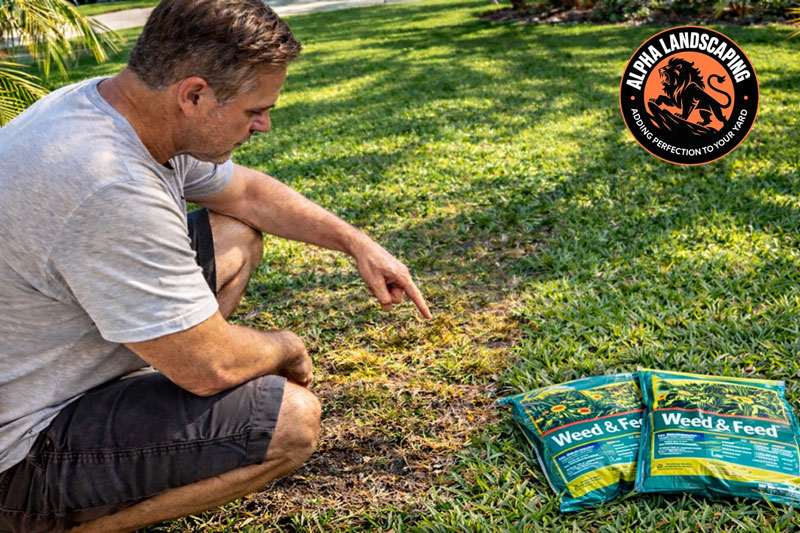
Weed and feed products combine fertilizer with herbicides. They seem convenient, but they have drawbacks for St Augustine:
St Augustine is sensitive to certain herbicides. Products containing 2,4-D can damage your grass, especially during hot weather or when the grass is stressed.
The timing for fertilizing rarely matches the timing for weed control. You end up compromising one or the other.
If you need weed control, handle it separately from fertilization. That way you can use the right products at the right times.
Super High Nitrogen Formulas
Products with nitrogen content above 25 percent can cause more problems than they solve. Yes, you’ll get fast greening, but you’ll also get:
- Increased chinch bug pressure
- Higher disease risk (gray leaf spot, large patch)
- Excessive thatch buildup
- Shallow root development
Anything Without Slow Release
Quick-release fertilizers might be cheaper, but they’re a waste of money in Florida. Our summer rains wash them away, and the nitrogen surge creates pest and disease problems.
Always check the label for slow-release nitrogen. It might say water insoluble nitrogen, sulfur coated urea, or polymer coated nitrogen. You want at least 50 percent slow release.
How Much Fertilizer Do You Actually Need?
This is where people mess up. More is not better. St Augustine grass in Central Florida needs 2 to 4 pounds of actual nitrogen per 1,000 square feet annually.
Here’s how to calculate:
- Measure your lawn: Length times width in feet equals square footage. Don’t guess.
- Find the nitrogen percentage: It’s the first number on the bag. A 15-0-15 fertilizer is 15 percent nitrogen.
- Calculate pounds needed: To apply 1 pound of nitrogen per 1,000 square feet with a 15-0-15 fertilizer:
- 100 ÷ 15 = 6.67 pounds of product per 1,000 square feet
- Multiply by your lawn size: If your lawn is 5,000 square feet:
- 6.67 × 5 = 33.35 pounds of fertilizer
Most 50-pound bags will cover your application. But always check the coverage area on the bag.
Application Tips for Best Results
Having the right fertilizer is only half the battle. Here’s how to apply it correctly:
Prep Your Lawn
Mow first: Cut your grass a day or two before fertilizing so the product reaches the soil.
Clear debris: Remove leaves, twigs, and clippings.
Check the weather: Don’t fertilize if heavy rain is forecast within 24 hours. You’ll just wash it away.
Use Proper Equipment
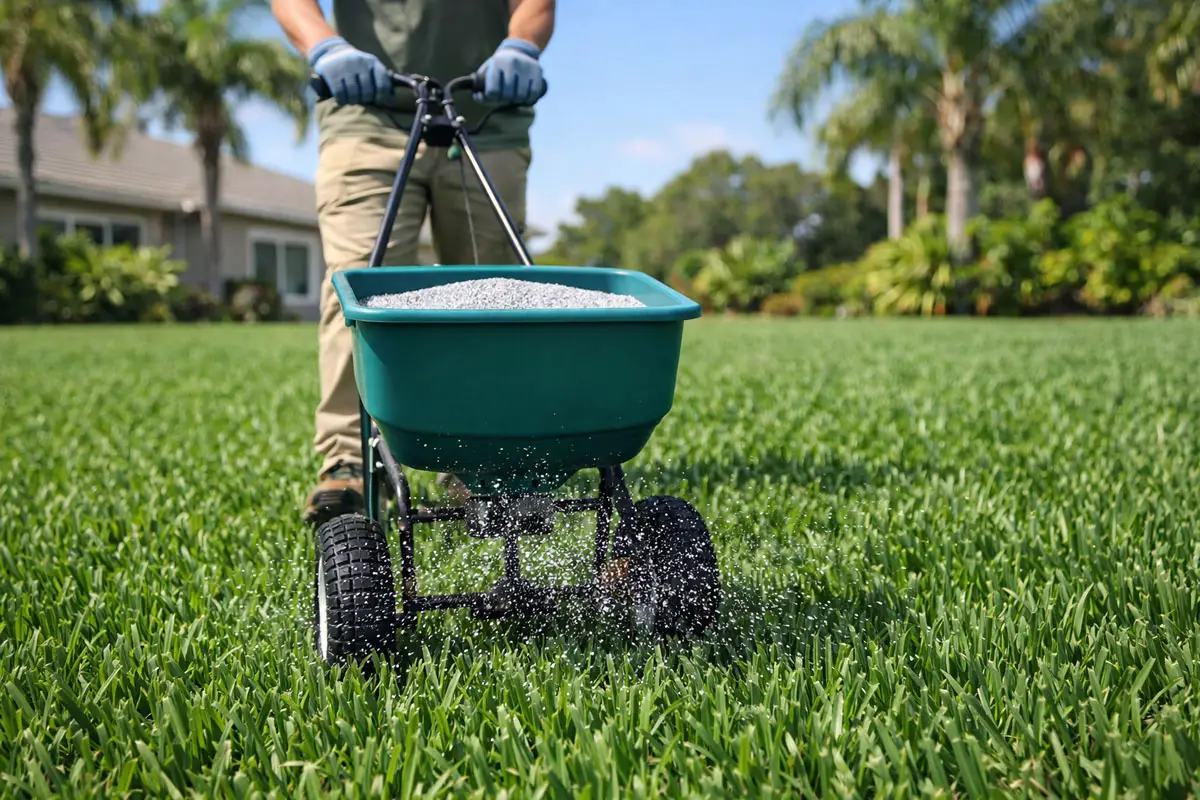
A broadcast spreader gives you even coverage. Hand spreading or tossing fertilizer out rarely works well.
Set your spreader according to the bag instructions. Then make a test pass and adjust if needed.
Water It In
After applying fertilizer, water your lawn with about 15 to 20 minutes of irrigation. This moves nutrients down to the roots and prevents burning.
Don’t water so heavily that you wash the fertilizer past the root zone. You want it in that top 4 to 6 inches of soil where your grass roots live.
Follow Local Regulations
Here in Polk County, we have a fertilizer ordinance. You cannot apply fertilizer within 10 feet of any waterbody or wetland. You also need to watch weather warnings and avoid fertilizing during storms.
These rules exist to protect our lakes and water quality. Follow them.
Organic vs Synthetic: Which Is Better?
I get this question all the time. The honest answer is both have their place.
Synthetic Fertilizers (Lesco, Sunniland, Scotts)
Pros:
- Faster results
- More affordable per application
- Precise nutrient control
- Easier to find
Cons:
- Can burn grass if misapplied
- Higher environmental impact
- Don’t improve soil health long term
Organic Fertilizers (Espoma, Milorganite)
Pros:
- Won’t burn your lawn
- Improve soil structure over time
- Safe for kids and pets immediately
- Lower environmental impact
Cons:
- Slower results
- More expensive
- Less precise nutrient content
- May attract wildlife (Milorganite can smell)
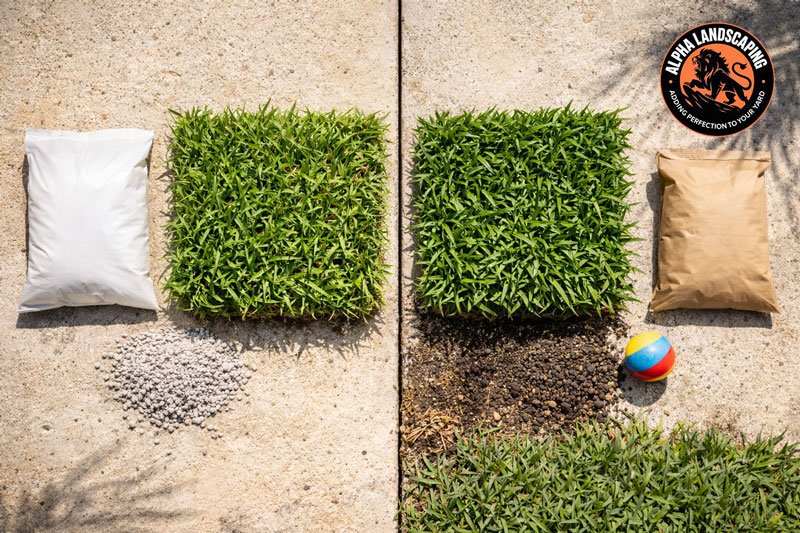
For most homeowners in Central Florida, I recommend a hybrid approach. Use synthetic slow release fertilizers for spring and summer when you need reliable results. Consider organic options for fall or summer iron applications when you want to play it safe.
Common Fertilizer Mistakes I See
After working on hundreds of lawns throughout Davenport, Clermont, Kissimmee, and Four Corners, these are the fertilizer mistakes I see most often:
Using the wrong product for the season: High nitrogen in summer creates chinch bug problems. Low potassium in fall means weak grass going into winter.
Not measuring the lawn: Guessing leads to over application or under application. Both waste money.
Skipping the fall feeding: Your last fertilizer application is just as important as the first. It sets your grass up for strong spring growth.
Fertilizing to fix every problem: Yellow grass isn’t always a nitrogen issue. It could be chinch bugs, disease, iron deficiency, compaction, or watering problems. More fertilizer won’t fix those. Learn to diagnose these issues in our guide to easy fixes for common lawn problems in Central Florida.
Ignoring your soil: Get a soil test every few years. It costs $7 to $15 through the UF IFAS Extension office and tells you exactly what your lawn needs. Way better than guessing. For more on this topic, read our guide on the difference between lawn care and lawn service.
When to Call a Professional
DIY fertilization works great for small lawns once you know what you’re doing. But there are times when professional help makes sense:
- Lawns larger than 10,000 square feet
- Ongoing pest or disease issues that won’t go away
- You don’t have time to stay on a fertilization schedule
- Your lawn isn’t responding to your current program
- You want someone to handle soil testing and custom programs
Weighing your options? Read our detailed comparison of DIY lawn care vs hiring a professional to help you decide.
When you hire professionals for lawn care, you’re getting commercial grade products and equipment, expertise in diagnosing problems before they get out of hand, and a customized program based on your specific lawn and soil.
Frequently Asked Questions
What is the best fertilizer for St Augustine grass in Florida?
Lesco 15-0-15 is the best all around fertilizer for most St Augustine lawns in Central Florida. It provides balanced nitrogen and potassium with slow release technology and iron for greening. For very sandy soils, Sunniland 24-0-11 works well but requires careful application to avoid chinch bugs.
Should I use fertilizer with iron for St Augustine?
Yes. St Augustine grass in Florida commonly shows iron deficiency. Fertilizers containing 2 to 6 percent iron help maintain deep green color. During summer, you can skip nitrogen fertilizer entirely and use iron sulfate applications to maintain color without encouraging pest problems.
How often should I fertilize St Augustine in Central Florida?
Fertilize St Augustine grass 3 to 4 times per year in Central Florida. Apply in late April, late May, late August, and October. Total annual nitrogen should be 2 to 4 pounds per 1,000 square feet depending on your soil type and maintenance level.
Can I use Scotts fertilizer on St Augustine?
Yes, but choose products specifically labeled for southern lawns like Scotts Southern Turf Builder. Avoid Scotts products designed for northern grasses. Be careful with application rates as some Scotts formulas have very high nitrogen content that can cause chinch bug problems if overused.
Is organic fertilizer better for St Augustine?
Organic fertilizers like Espoma won’t burn your lawn and improve soil health over time, but they work slower and cost more than synthetic options. For most Central Florida homeowners, slow release synthetic fertilizers provide better value and more predictable results. Organic fertilizers work well for summer applications when you want to avoid pest issues.
What NPK ratio is best for St Augustine grass?
For St Augustine in Central Florida, look for ratios around 15-0-15, 16-4-8, or 24-0-11. You want roughly a 2:1 ratio of nitrogen to potassium with little to no phosphorus. Our sandy soils need both nitrogen and potassium regularly, but usually have adequate phosphorus.
When should I not fertilize St Augustine?
Don’t fertilize St Augustine during winter dormancy (November through March in Central Florida). Also avoid fertilizing during severe drought stress, during the heat of summer (July to early August), or if heavy rain is forecast. Use iron instead of nitrogen during peak summer heat.
Final Thoughts
The best fertilizer for St Augustine grass in Central Florida is one that matches your lawn’s needs for each season, contains slow-release nitrogen to prevent nutrient loss and pest problems, includes iron for color, and has the right NPK ratio for our sandy soils.
For most homeowners in Polk and Osceola Counties, Lesco 15-0-15 provides the best balance of performance, value, and ease of use. It’s what we use for most of our commercial and residential lawn-maintenance clients because it consistently delivers results without causing problems.
Remember that fertilizer is just one piece of proper lawn care. Your St Augustine also needs correct mowing height, proper watering, and attention to pest and disease issues. When you get all those pieces right, you’ll have thick, green grass that makes your property stand out.
If you want everything in one place — grass types, mowing, fertilizing, watering, and pest management all laid out by season — our complete Central Florida lawn maintenance guide is the resource I’d point you to first.
If you’re in Central Florida and want help with fertilization or any other lawn care services, we’d be happy to help. At Alpha Landscaping LLC, we’ve been providing honest service to homeowners and property managers since 2020. Contact us for a free quote.
The best fertilizer for St Augustine grass in Central Florida is the one that keeps your lawn healthy, green, and free from the pest and disease problems that plague over fertilized lawns.
Related Articles You’ll Find Helpful
When to Fertilize St Augustine Grass in Florida: Complete Seasonal Guide
How to Keep St Augustine Grass Healthy in the Summer Heat
Easy Fixes for Common Lawn Problems in Central Florida
DIY Lawn Care vs Hiring a Professional
Sources:
- University of Florida IFAS Extension. “General Recommendations for Fertilization of Turfgrasses on Florida Soils.” https://ask.ifas.ufl.edu/publication/LH014
- Lesco Product Information. “15-0-15 St. Augustine Fertilizer.” Home Depot. https://www.homedepot.com/p/LESCO-15-0-15-St-Augustine-Fertilizer-080224/100330735
- University of Florida IFAS Extension. “Fertilizing Your Florida Lawn.” https://gardeningsolutions.ifas.ufl.edu/care/fertilizer/fertilizing-the-lawn/
- LawnStarter. “Best Fertilizers for St. Augustinegrass.” https://www.lawnstarter.com/blog/reviews/best-fertilizers-st-augustinegrass/