When to Fertilize St Augustine Grass in Florida: Complete Seasonal Guide
When to fertilize St Augustine grass in Florida is one of the most common questions I get from homeowners in Polk and Osceola Counties. The truth is simple: timing matters more than anything else when it comes to feeding your St Augustine lawn. Get it right, and you’ll have thick, green grass all season long. Get it wrong, and you could be wasting money while inviting pests and disease to move in.
I’m Austin Halsey, owner of Alpha Landscaping LLC, and I’ve been caring for Central Florida lawns since 2020. I’ve seen what works and what doesn’t when it comes to St Augustine fertilization in our unique climate.
This guide breaks down exactly when to fertilize your lawn based on real science and local conditions here in Davenport, Four Corners, Clermont, and throughout Central Florida.
Why Timing Your St Augustine Fertilization Matters
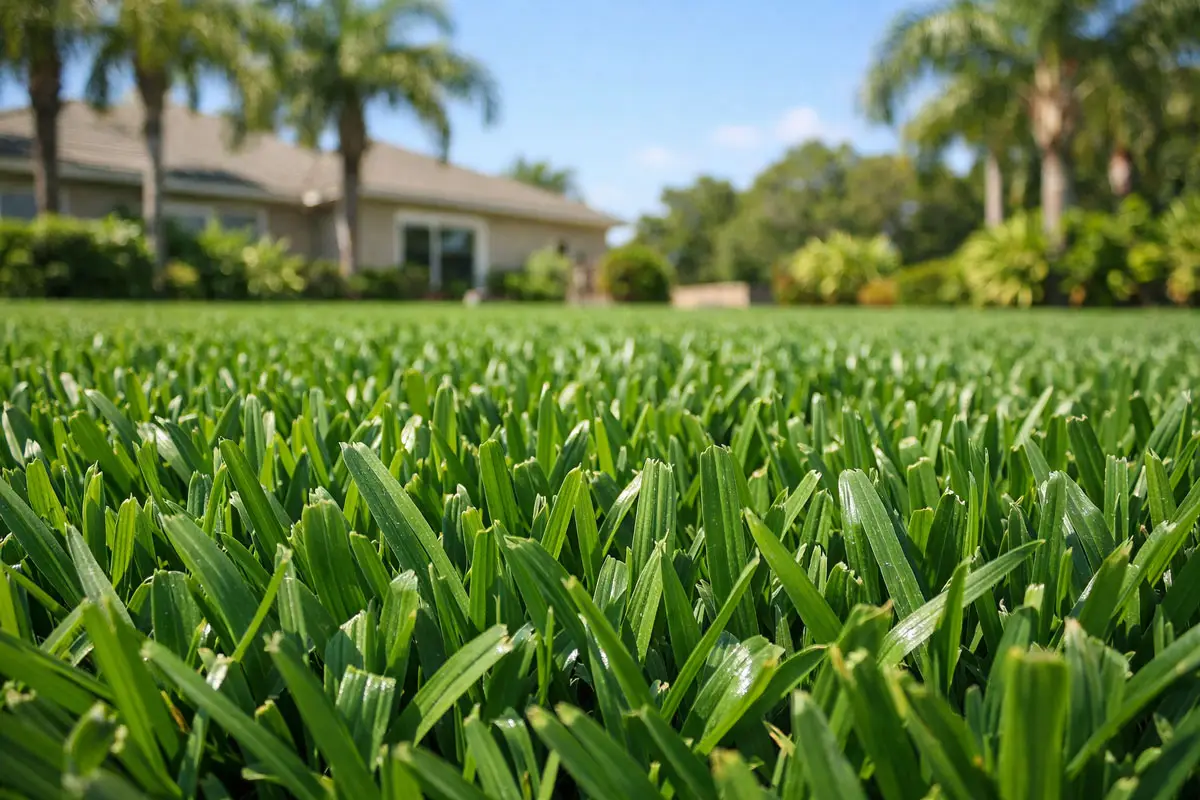
St Augustine grass is what we call a warm season grass. That means it grows actively when soil temperatures stay above 65°F and pretty much takes a nap when things cool down. Here’s the key: you want to feed your grass when it’s actively growing and can actually use those nutrients.
According to University of Florida IFAS Extension research, fertilizing only when your lawn is actively growing prevents nutrient waste and reduces environmental impact.
Think about it like this: would you eat a big steak dinner right before bed? Your body can’t use all that energy when you’re asleep. Same goes for your grass. Feed it when it’s awake and working hard, not when it’s dormant.
In Central Florida, our growing season runs roughly from April through September. That’s your window. But even within that window, there are better and worse times to apply fertilizer.
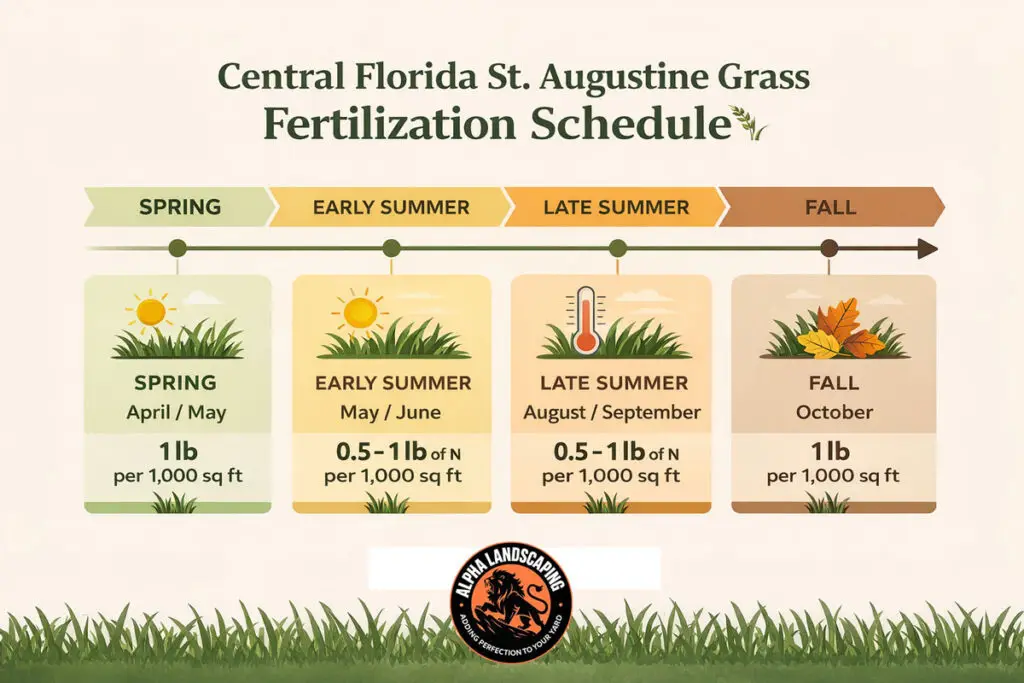
The 4 Key Fertilization Windows for Central Florida St Augustine
Based on soil temperatures, rainfall patterns, and grass growth cycles in Polk and Osceola Counties, here are the four main fertilization windows I recommend:
Spring Green Up (Late April to Early May)
This is your first feeding of the year. Wait until your grass has needed mowing at least twice before you fertilize. The University of Florida recommends the spring application particularly in Central Florida occur in mid to late April or after the lawn has needed mowing twice, indicating actively growing grass that is able to take up the nutrients.
Why wait? If you fertilize too early, you’re forcing growth before the grass is ready. That creates shallow roots that can’t handle our summer heat and drought stress.
What to apply: 1 pound of nitrogen per 1,000 square feet using a complete fertilizer with an NPK ratio around 16-4-8.
Early Summer Boost (Late May to Early June)
Your second application happens right before we hit the rainy season and summer heat. This feeding helps your St Augustine build strength for the toughest part of the year.
What to apply: 0.5 to 1 pound of nitrogen per 1,000 square feet. Use a slow release formulation here.
Late Summer Feed (August to Early September)
After we get through the peak heat and heaviest rains, your grass needs another feeding to maintain color and recover from summer stress.
What to apply: 0.5 to 1 pound of nitrogen per 1,000 square feet with slow release nitrogen.
Fall Maintenance (Early to Mid October)
This is your final feeding before things start cooling down. It helps your grass store energy for winter and green up faster next spring.
What to apply: 1 pound of nitrogen per 1,000 square feet.
Central Florida Fertilization Schedule
Here’s a quick reference table showing the fertilization schedule I use for residential lawn maintenance clients in Polk and Osceola Counties:
| Application Window | Timing | Nitrogen Rate | Fertilizer Type |
|---|---|---|---|
| Spring Green Up | Late April/Early May | 1 lb per 1,000 sq ft | Complete (16-4-8) |
| Early Summer | Late May/Early June | 0.5-1 lb per 1,000 sq ft | Slow Release |
| Late Summer | August/Early September | 0.5-1 lb per 1,000 sq ft | Slow Release |
| Fall Maintenance | Early/Mid October | 1 lb per 1,000 sq ft | Slow Release |
Total Annual Nitrogen: 2 to 4 pounds per 1,000 square feet depending on your soil and maintenance level.
Understanding Nitrogen Requirements for St Augustine
St Augustine grass requires between 2 to 4 pounds of actual nitrogen per 1,000 square feet annually, with the higher rate chosen for lawns growing on sandy soils. Here in Central Florida, most of us are dealing with sandy soil, so you’re probably closer to the 3- to 4-pound range.
But here’s what most people miss: more isn’t better. A University of Florida study found that overfertilization with nitrogen can trigger a population explosion of Southern chinch bugs, the number-one insect pest of St. Augustine grass.
I’ve seen this play out hundreds of times. A homeowner thinks their yellowing grass needs more fertilizer, so they dump nitrogen on it in July. Two weeks later, chinch bugs have moved in and they’re dealing with brown patches everywhere. Not fun.
The Chinch Bug Connection
This is crucial to understand. Excessive fertilizer makes the grass more attractive to chinch bugs as a food source. No more than 3 to 4 pounds of nitrogen per 1,000 square feet should be applied annually to St. Augustinegrass in sunny locations.
Research from the University of Florida showed that chinch bugs produced the most eggs on St Augustine grass fed the equivalent of 2 pounds nitrogen per 1,000 square feet per month. That’s way too much, but it shows you how fertilization directly affects pest pressure.
The fix? Stick to the recommended rates and use slow release nitrogen. It feeds your grass steadily without creating that flush of tender new growth that chinch bugs love.
What About Summer Fertilization?
Here’s where things get tricky. You might have heard that you shouldn’t fertilize in summer. That’s partially true, but it depends on local regulations and what you’re applying.
Polk County Fertilizer Ordinance
Polk County has had a fertilizer management ordinance in place since 2013. The ordinance requires a maximum of 1 pound of slow release nitrogen per 1,000 square feet per application and no fertilizer shall be applied within 10 feet of any waterbody or wetland.
Unlike some Florida counties, Polk County doesn’t have a complete summer blackout period. However, no fertilizer containing nitrogen or phosphorus shall be applied during severe thunderstorm warnings or watches, flood warnings or watches, tropical storm or hurricane warnings or watches, or when heavy rain is likely to exceed two inches in a 24 hour period.
Bottom line: you can fertilize in summer here, but you need to watch the weather closely and use slow release formulations only.
Using Iron Instead of Nitrogen in Summer
Want to keep that dark green color in July and August without the risks? Use iron.
For a greener lawn in summer, consider applying iron sulfate or chelated iron to your lawn instead of a complete fertilizer. These products give you the dark green color you desire without stimulating growth.
Iron sulfate can be applied at 2 ounces per 3 to 5 gallons of water per 1,000 square feet to provide this greening effect.
I use this approach all the time during our summer lawn care services. It keeps grass looking great without encouraging disease, chinch bugs, or excessive growth during the hottest months.
Choosing the Right Fertilizer for Central Florida
Not all fertilizers are created equal, especially for our sandy soils and strict environmental regulations.
What to Look For
Slow Release Nitrogen: This is non-negotiable. Look for products that contain at least 50 percent slow-release (also called water-insoluble) nitrogen. Slow-release fertilizers reduce the risk of lawn burning and provide a steady supply of nutrients over time, especially important in Florida, where seasonal rains can cause fertilizer to leach.
NPK Ratio: For St. Augustine, aim for a roughly 2:1 ratio of nitrogen to potassium. A 16-4-8 or 15-0-14 works well. Not sure which product to choose? Our guide on the best fertilizer for St Augustine grass in Central Florida reviews the top options available at local stores.
Most Florida soils already contain enough phosphorus, so adding more is unnecessary. That middle number (phosphorus) should be zero or very low unless a soil test says otherwise.
Contains Micronutrients: Look for products with iron, manganese, and sulfur. These micronutrients help prevent yellowing and support overall grass health in our alkaline soils.
Reading the Fertilizer Label
Every bag shows three numbers, like 16-4-8. That’s the NPK ratio: Nitrogen, Phosphorus, and Potassium.
Here’s how to calculate how much to apply:
- Take 100 and divide by the first number (nitrogen percentage)
- That tells you how many pounds of product you need per 1,000 square feet to get 1 pound of actual nitrogen
Example: For a 16-4-8 fertilizer:
100 ÷ 16 = 6.25 pounds of product per 1,000 square feet
How to Apply Fertilizer Correctly
I see a lot of mistakes here. Even if you have the right product and timing, poor application can waste money and harm your lawn.
Before You Fertilize
Measure your lawn: You need to know your square footage. Don’t guess. Use a measuring tape or one of those lawn calculator apps. Many people overestimate their lawn size and end up using way too much fertilizer.
Mow first: Cut your grass a day or two before fertilizing. This lets the fertilizer reach the soil instead of sitting on grass blades.
Clear debris: Remove leaves, twigs, and clippings so the fertilizer can make good soil contact.
Application Tips
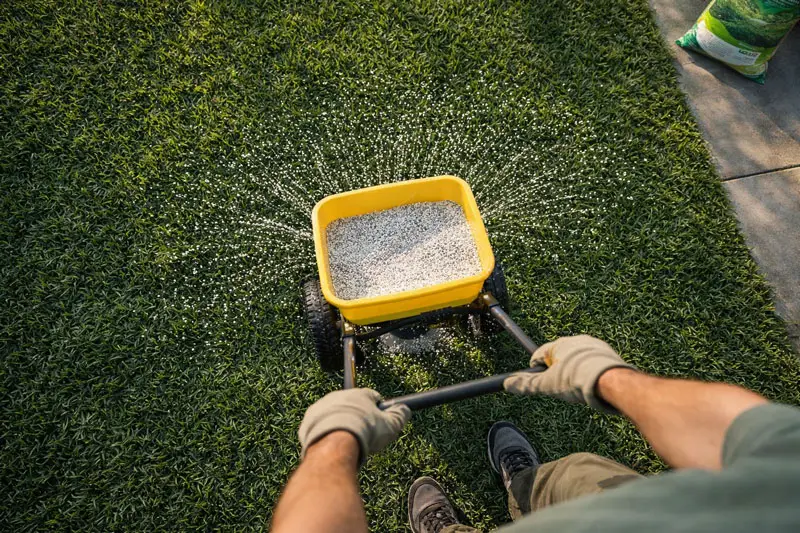
Use a broadcast spreader: This gives you even coverage. Walking back and forth with a hand spreader or just tossing it out rarely works well.
Apply to dry grass: Fertilizer sticks to wet grass and can burn it. Wait until morning dew has dried off.
Water it in: After applying fertilizer, water it in without washing it past the root zone. About 15 to 20 minutes of irrigation does the job. This moves nutrients down to the roots where they’re needed.
Don’t fertilize before rain: Fertilizer use is not recommended if rainfall is forecast within the next 24 hours. You’ll just wash expensive nutrients into storm drains.
Soil Testing: The Secret Weapon
I always tell clients that soil testing takes the guesswork out of fertilization. The most important part of proper fertilization is starting with a soil test. We always recommend testing before fertilizing to ensure that you’re only applying what your soil is lacking.
You can get a soil test through the UF/IFAS Extension Polk County office. They’ll test pH, phosphorus, potassium, magnesium, calcium, and give you specific recommendations for your exact lawn.
Cost is minimal, usually around $7 to $15. Compare that to the $100+ you might spend on fertilizer each year. It’s worth it to know exactly what your grass needs.
Common Fertilization Mistakes to Avoid
After years of doing this work throughout Davenport, Clermont, Kissimmee, and Four Corners, I’ve seen these mistakes over and over:
Fertilizing Too Early in Spring: Wait until your grass is actively growing. You’ll know because you’ll need to mow it. Fertilizing dormant grass wastes money and can damage your lawn.
Using Quick Release Nitrogen in Summer: This creates that flush of tender growth that chinch bugs and gray leaf spot disease love. Stick with slow release formulations.
Skipping the Fall Application: Your last feeding of the year is just as important as the first. It helps your grass store energy for winter and green up faster in spring.
Over Fertilizing to Fix Problems: Yellow grass isn’t always a nitrogen issue. It could be chinch bugs, disease, iron deficiency, or watering problems. More fertilizer won’t fix those issues and often makes them worse.
Ignoring Buffer Zones: No fertilizer shall be applied within 10 feet of any waterbody or wetland. This isn’t just good environmental practice, it’s the law in Polk County.
Signs Your St Augustine Needs Fertilizer
How do you know when it’s actually time to fertilize? Look for these signs:
Light Green Color: Grasses like St Augustinegrass can fade to a lighter green in summer due to lack of nitrogen. But remember, don’t jump straight to nitrogen fertilizer in summer. Try iron first.
Slow Growth: If you’re only mowing every 10 to 14 days during the growing season, your grass probably needs feeding.
Thin Turf: When you can see soil between grass blades, that’s often a sign of nutrient deficiency combined with other stress factors.
Purple or Yellow Lower Leaves: This can indicate phosphorus deficiency, though it’s rare in Florida soils.
DIY vs Professional Fertilization
Look, I’m going to be straight with you. Fertilizing your own lawn can save money if you do it right. But there’s a learning curve.
When you hire professionals for lawn maintenance, you’re getting someone who knows the exact timing for Central Florida, has commercial grade equipment for even application, can spot problems like chinch bugs or disease before they get out of hand, and handles all the calculations and measurements.
For small lawns (under 5,000 square feet), DIY fertilization makes sense once you learn the basics. For larger properties or if you’re dealing with ongoing pest or disease issues, professional help usually pays for itself.
Year Round St Augustine Care
Fertilization is just one piece of the puzzle. Your grass also needs proper mowing, watering, and pest management. Check out our complete guide to St Augustine summer care for more tips on keeping your lawn healthy through our toughest season.
And if you want to see how fertilization timing fits into the bigger picture of year-round lawn health, our Central Florida lawn maintenance guide for 2026 covers every maintenance window from spring green-up through fall — including mowing, pest management, and HOA lawn rules.
Frequently Asked Questions
Can you fertilize St Augustine in summer?
Yes, you can fertilize St Augustine in summer in Polk County, but use slow release nitrogen only and watch weather forecasts carefully. Many pros (including me) prefer using iron instead of nitrogen during July and August to maintain color without encouraging pest problems.
What happens if you fertilize too early in spring?
Fertilizing before your grass is actively growing wastes nutrients and can force shallow root development. Wait until soil temperatures stay consistently above 65°F and you’ve mowed at least twice before applying your first spring feeding.
Should you fertilize before or after mowing?
Mow first, then fertilize a day or two later. This ensures fertilizer reaches the soil instead of sitting on grass blades where it’s less effective and can cause burning.
How long after fertilizing can you water?
Water immediately after applying granular fertilizer. This moves nutrients down to the root zone. Wait at least 15 to 20 minutes to let the water soak in, but don’t water so heavily that you wash fertilizer past the roots.
What’s the best NPK ratio for Florida St Augustine?
Look for ratios around 16-4-8 or 15-0-14. You want roughly twice as much nitrogen as potassium, and little to no phosphorus since most Florida soils already have plenty.
Can I use the same fertilizer year round?
You can, as long as it’s a quality slow release product. But many pros switch to iron applications during peak summer instead of using nitrogen containing fertilizers.
How do I know if my yellowing grass needs fertilizer or has pests?
Get down on your hands and knees and part the grass at the border between yellow and green sections. Look for tiny black and white chinch bugs. If you see them, that’s your problem, not lack of fertilizer. Check out our guide on common lawn problems in Central Florida for more diagnostic tips.
Final Thoughts
When to fertilize St Augustine grass in Florida comes down to understanding your grass’s growth cycle and working with Central Florida’s unique climate. Feed your lawn during the active growing season from April through October, use slow-release nitrogen to prevent pest problems, watch local weather and regulations, and consider iron applications during peak summer instead of nitrogen.
Get the timing right, and you’ll spend less money on fertilizer while growing thicker, healthier grass that can handle our heat, humidity, and pest pressure. Get it wrong, and you’re wasting money while potentially creating problems.
If you’re in Polk or Osceola Counties and want professional help with fertilization or any other lawn care services, we’d love to help. At Alpha Landscaping LLC, we’ve been providing honest, reliable service to homeowners and property managers throughout Davenport, Clermont, Four Corners, and all of Central Florida since 2020. Get in touch with us for a free quote.
When to fertilize St Augustine grass in Florida is one of the most important decisions you’ll make for your lawn’s health and appearance throughout the year.
Related Articles You’ll Find Helpful:
Best Fertilizer for St Augustine Grass in Central Florida: What Actually Works
St Augustine Grass Summer Care Guide for a Healthy Yard
Easy Fixes for Common Lawn Problems in Central Florida
DIY Lawn Care vs Professional Service
Sources:
- University of Florida IFAS Extension. “Fertilizing Your Florida Lawn.” https://gardeningsolutions.ifas.ufl.edu/care/fertilizer/fertilizing-the-lawn/
- University of Florida IFAS Extension. “Fertilization and Irrigation Needs for Florida Lawns.” https://ask.ifas.ufl.edu/publication/EP110
- University of Florida IFAS Extension. “General Recommendations for Fertilization of Turfgrasses on Florida Soils.” https://ask.ifas.ufl.edu/publication/LH014
- University of Florida IFAS Extension Polk County. “Residents Guide to the Polk County Fertilizer Ordinance.” https://blogs.ifas.ufl.edu/polkco/2023/06/03/residents-guide-to-the-polk-county-fertilizer-ordinance/
- University of Florida News. “Overfertilizing St. Augustinegrass could encourage chinch bugs.” https://news.ufl.edu/archive/2008/03/overfertilizing-st-augustinegrass-could-encourage-chinch-bugs-uf-researcher-w.html
- University of Florida IFAS Extension. “Fertilizing Your North Florida Lawn.” https://sfyl.ifas.ufl.edu/media/sfylifasufledu/baker/docs/pdf/horticulture/Fertilizing-Your-N-FL-Lawn.pdf